A camera nobody asked for
In December 1975, a twenty-four-year-old engineer at Kodak called Steven Sasson (five years older than I am now) finished a machine he had been asked to build almost as a side project. It weighed about three and a half kilograms. It took twenty-three seconds to record one black-and-white picture, a hundred pixels by a hundred, onto a cassette tape, and the picture could only be seen by playing the tape back through a television. It was the first self-contained digital camera.
Sasson later described taking it round Kodak’s meeting rooms. The executives were curious and sceptical. By his account, they asked when it would be ready, how people would store their pictures, and why anyone would ever want to look at photographs on a television. None of these were stupid questions. Kodak sold film, paper and chemicals, and in 1975 there was no customer anywhere who needed a camera the weight of a small dog that saved blurry squares onto tape. The machine stayed a research project. Thirty-six years later, in January 2012, after digital photography had remade its industry, Kodak filed for bankruptcy.
What interests me is that every question Kodak asked was a good one. Each was also, read the other way round, a specification: make it lighter, make it faster, give the pictures somewhere to live, give people a reason to look at them on a screen. I want to argue that most serious objections work like this. They contain a small, different world in which the objection would stop being true. Learning to find that world, and to notice when there is not one, has become more useful as testing ideas becomes cheaper.
I. The Devil’s Advocate
By the late sixteenth century, the Catholic Church had formalised an adversarial role in canonisation. The promotor fidei, popularly called the devil’s advocate (I had no idea it was a real job until I started reading for this essay!), searched a candidate’s life for flaws, challenged alleged miracles and proposed ordinary explanations for extraordinary claims. The office was not there to make sainthood impossible. It was there to make false sainthood harder.
That is what makes the role interesting. The devil’s advocate did not work against the institution. He protected its credibility. His objections mattered because a successful case had to survive them.
In 1983 John Paul II sharply reduced the role, and went on to canonise more saints than any pope before him. Whether one caused the other is still argued about. What the history leaves is a distinction: the same objections can be used to sink a case, or to make sure that a case which succeeds deserves to.
II. Two kinds of no
The modern start-up world has a devil’s advocate of its own. Its favourite question is whether an idea has “product-market fit”: whether a real group of customers wants it badly enough, right now, to pay. The question is a good one, and the advice built around it is mostly sound. Talk to customers before writing code. Test the smallest version. Do not fall in love with a solution.
The trouble is how easily that question turns into a filter for killing ideas. Early on, customers often cannot name the solution, because they have never seen it. Asked as a verdict about the thing itself, “who needs this today?” kills nearly everything new. Asked about the need underneath, it is the most useful question there is.
The history of online grocery shopping shows the other way to ask it. Webvan, founded in California in the late 1990s, promised groceries delivered to your door within a half-hour window. In 1999 it signed a contract with the engineering firm Bechtel, reported at about a billion dollars, to build twenty-six highly automated warehouses across the United States. It went bankrupt in July 2001, a few years before I was born, having burned through hundreds of millions of dollars. For a decade, “Webvan” was shorthand for an idea the world did not want.
In 2012, former Amazon engineer Apoorva Mehta started Instacart with the same underlying promise and none of the warehouses. Its shoppers walked into supermarkets that already existed, filled orders from shelves that were already stocked, and drove them to customers’ homes; by 2023 its network covered more than 80,000 stores (Maplebear, 2023). But Instacart was not simply Webvan with the warehouses removed. Smartphones, online payment, flexible work and shops willing to take part had all arrived in the decade between. Webvan may have been wrong about the architecture, the timing and how fast demand would grow. Instacart found the changed world in which part of that idea could finally work, and its own filing still lists shopper supply, retailer relationships, fraud and the cost of each order among its main risks.
This is what I mean by an objection containing a world. A useful objection does more than predict failure. It names the condition that would have to change for the idea to work. If changing that condition leaves the underlying need intact, the objection is a design brief. “The camera is too heavy” asks for a lighter camera. “The warehouses make every delivery unprofitable” asks for another way to fulfil orders. But some objections contain no such world. If the product only becomes affordable once you remove the part people valued, or if the problem disappears whenever anyone looks at it closely, the objection is a verdict. The difference is the difference between a blueprint and a gravestone.
The most recent example I know is still unfinished. In 2025 Anthropic and the AI-safety company Andon Labs let a version of Claude run a small shop in Anthropic’s San Francisco office. In its first phase it lost money, gave away too many discounts and was talked into selling tungsten cubes at a loss (Anthropic, 2025). It would have been easy to conclude that AI cannot run a business. Instead the team read each failure as a missing tool: they showed the model what its stock had cost, made it check prices before setting them, and gave it a manager to answer to. In the second phase, weeks with negative profit margins were largely eliminated, although Anthropic is careful to say it could not yet reliably profit on even its most popular items (Anthropic, 2025). It proves nothing yet about whether the business works, but it shows what an objection looks like when someone treats it as a specification.
III. Imagining the failure first
There is a technique for asking the useful kind of question on purpose. The psychologist Gary Klein called it the premortem (Klein, 2007). Before a project starts, the team imagines that it is a year later and the project has failed completely, and everyone writes down, independently, why. Klein drew on research suggesting that imagining an event has already happened helps people find more reasons for it, by about thirty per cent in one set of experiments (Mitchell, Russo and Pennington, 1989). Military red teams work the same way, attacking a plan as an enemy would so the real enemy finds fewer gaps. I like both because they are devil’s advocates pointed in the right direction: they assume the worst on purpose, then hand every reason for failure back to the team as something specific enough to work on.
IV. Why this matters more now
Building has not become cheap in every sense. Warehouses, regulation, distribution, trust and physical work remain stubbornly expensive. What AI has made cheaper is one particular kind of uncertainty: whether an idea can become concrete enough for somebody to react to it.
I built a site that searches for your name inside π in five days of my midterms, although the scariest part was still my mom finding out. I have watched an idea travel from a sentence to something clickable in an afternoon. When the first honest test costs a weekend rather than a year, evidence becomes cheaper than speculation.
New products often arrive before customers have words for them, but not before customers have lives in which they would matter. Nobody asked Kodak for a light-sensitive chip. People were already impatient to see, keep and share their photographs. The vocabulary came later. The desire did not.
V. When ideas should die
Some ideas do deserve to die, and refusing to let them is its own well-studied mistake: the sunk cost effect, continuing to invest because of what has already been spent rather than what will be returned (Arkes and Blumer, 1985), which biologists once named after Concorde (Dawkins and Carlisle, 1976). My examples also have a survivor problem: we remember Instacart because it succeeded, and not the many who fixed the same weakness and failed anyway. So the rule I would defend is narrower than “never kill an idea”. Kill it when the weakness cannot be fixed, or when fixing it would remove the thing people wanted. “Nobody is asking for this exact product yet” is not, by itself, that kind of weakness, as long as the need behind it is real. “Nobody wants this problem solved” is.
VI. The weakness that became the moat
Rentably, which I co-founded this year, is my own small test of this. The idea is simple to say: let an AI agent hire a person for a job in the physical world, like checking a leak in a shop at 11 pm, and pay them when the job is done. Early on, the doubts arrived quickly. A competitor, RentAHuman, had already launched and was getting attention. My elder cousin, who has given me most of my best start-up advice (usually in three sentences, often starting with “Err”), put the obvious objection plainly: a marketplace where people list themselves and AI agents hire them is a commodity, and in a commodity the company with more money wins. Find what makes you different, or do not bother.
He was right about the weakness. He was also, I think, giving me the useful kind of no: one that identified what had to change. So instead of asking whether the idea should exist, I asked what was weakest about it. The deepest weakness we could act on was trust. An AI agent has no way to know whether a stranger really did a job, and the stranger has no way to know the agent will pay. The risk is real. A study of 303 jobs posted on RentAHuman found several kinds of abuse, from credential fraud to fake referrals, available for a median of about twenty-five dollars a worker, and showed that simple screening rules could catch many of them (Mehta, 2026). The study does not test any particular fix. Rentably’s answer was to make proof the centre of the product: photos taken inside our app, at the right place and time, checked before any money moves (yes, we really do check the timestamps :) ). Nobody is paid until the proof passes.
Anyone can copy a directory of workers. If enough real tasks pass through Rentably, what becomes harder to copy is the accumulated knowledge of what convincing proof looks like for each kind of work. I do not know yet whether Rentably will succeed. I do know it would not exist if every objection had been treated as a verdict.
Four objections, four specifications
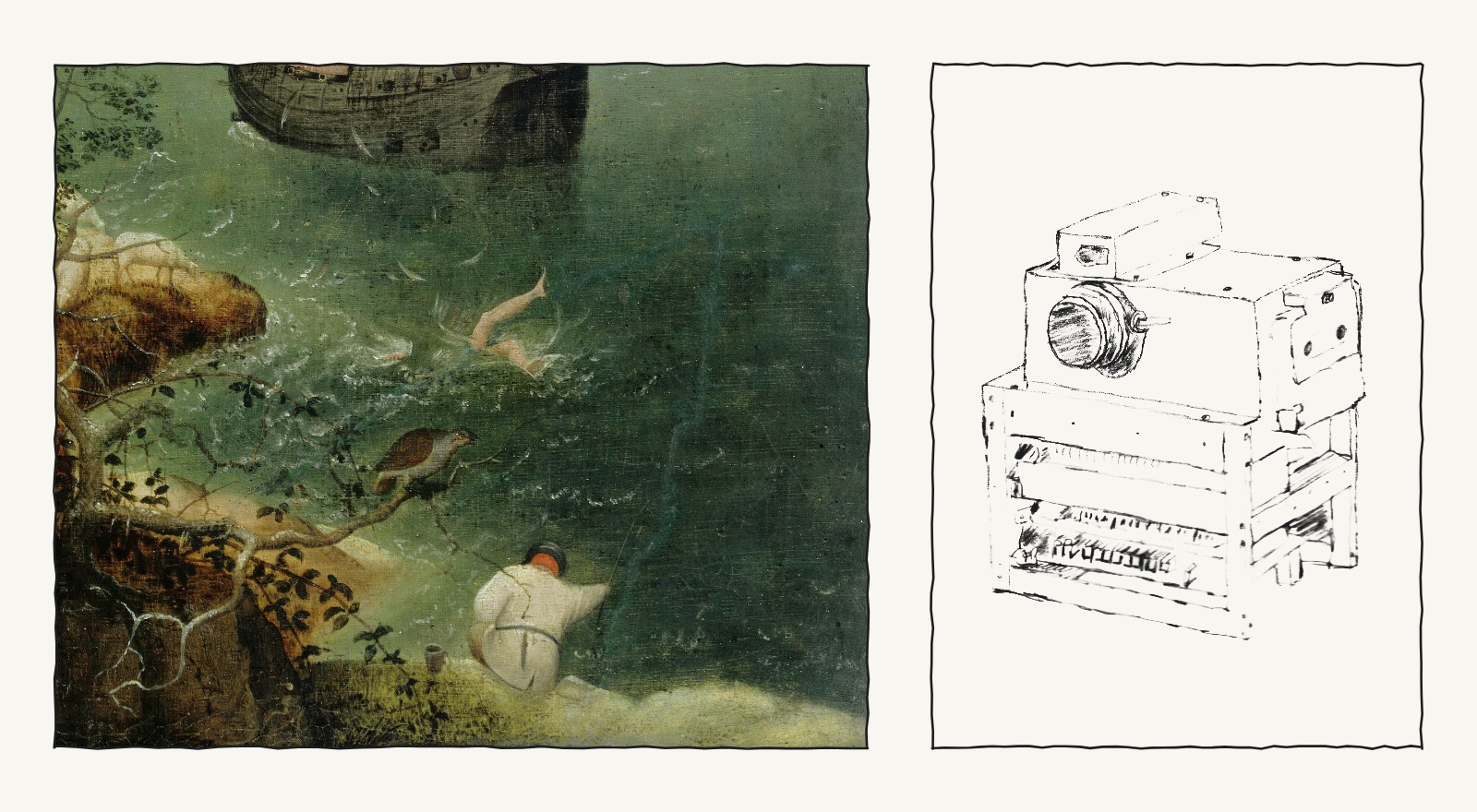
Kodak did not simply ignore digital photography. Sasson kept working on it, and by 1989 he and a colleague had built a working digital camera of the kind photographers would recognise, which the company chose not to sell. Kodak went on to invest heavily in digital, and in 2005 it sold more digital cameras in the United States than anyone else. The harder truth is that Kodak noticed, invested and took part, and still could not replace the money that film had made quickly enough. In 2009 Sasson received the National Medal of Technology and Innovation for the camera he had built in 1975.
Read now, the questions in those meeting rooms sound prophetic, though not in the way their authors meant. The camera was too heavy, too slow and too awkward. There was nowhere sensible to keep the pictures and little reason to look at them on a television. Four objections, and hidden inside them, four specifications. That does not mean Kodak should have sold Sasson’s machine in 1975. It means the machine had already shown the work needed to make its strange future ordinary.
This is the distinction I want to remember with Rentably. “A marketplace can be copied” is useful because it asks what cannot. “Agents cannot trust evidence from the physical world” is useful because it gives us something precise to solve. But if there is no recurring physical task people care enough to delegate, no amount of verification will rescue the idea. If repeated testing finds no such task, the objection has stopped being a specification and become a reason to stop.
AI makes it cheaper to build the small worlds in which an objection might stop being true. It does not make customers, trust or economics automatic. What the critic owes the idea is a no precise enough to test.
An objection is not always the opposite of an idea. Sometimes it is the idea, arriving backwards.
References
- Anthropic (2025) ‘Project Vend: phase two’, research post, 18 December.
- Arkes, H.R. and Blumer, C. (1985) ‘The psychology of sunk cost’, Organizational Behavior and Human Decision Processes, 35(1), pp. 124–140.
- Dawkins, R. and Carlisle, T.R. (1976) ‘Parental investment, mate desertion and a fallacy’, Nature, 262, pp. 131–133.
- John Paul II (1983) Divinus Perfectionis Magister, apostolic constitution, 25 January.
- Dicastery for Divine Worship, ‘The Sacred Congregation of Rites’, history (cultodivino.va).
- Klein, G. (2007) ‘Performing a project premortem’, Harvard Business Review, 85(9), pp. 18–19.
- Mehta, P. (2026) ‘Security risks of AI agents hiring humans: an empirical marketplace study’, arXiv:2602.19514.
- Maplebear Inc. (Instacart) (2023) Form S-1 registration statement, US Securities and Exchange Commission, August.
- Mitchell, D.J., Russo, J.E. and Pennington, N. (1989) ‘Back to the future: temporal perspective in the explanation of events’, Journal of Behavioral Decision Making, 2(1), pp. 25–38.
- Estrin, J. (2015) ‘Kodak’s first digital moment’, The New York Times, Lens blog, 12 August.
- National Inventors Hall of Fame, ‘Steven Sasson’, inductee profile.
- Eastman Kodak Company (2005) Annual report.
- PetaPixel (2017) ‘What Kodak said about digital photography in 1975’, 21 September.
- Encyclopaedia Britannica, ‘Devil’s advocate’ (on the 1587 office and the 1983 reform).
Rentably has a page of its own. The essay before this one is The Heat of Forgetting.