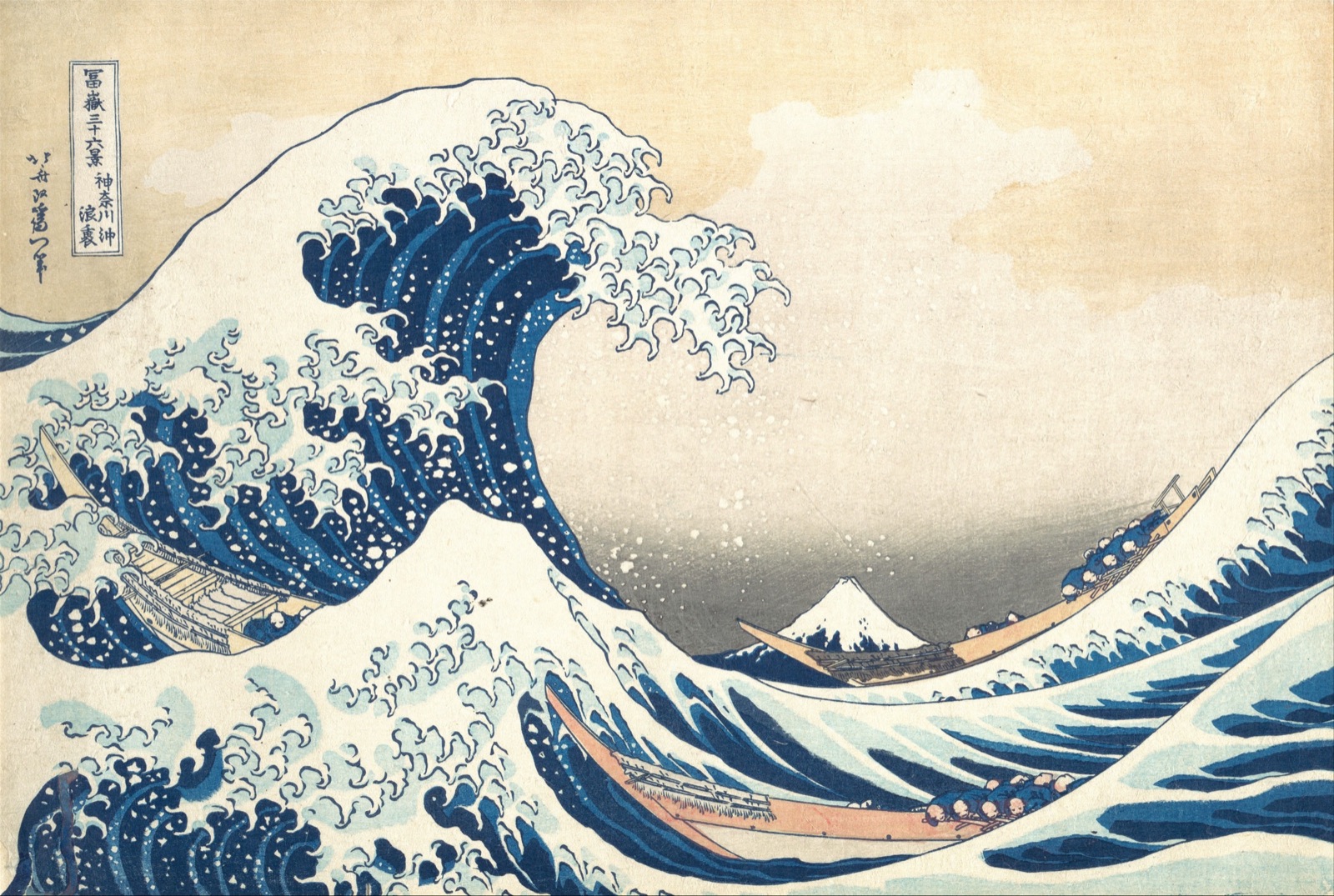
“To think is to forget differences, generalize, make abstractions.”
Jorge Luis Borges, “Funes the Memorious” (1942), trans. James E. Irby
A man who could not forget
In a story Borges published in 1942, a young man in Fray Bentos, a small town in Uruguay, falls from a horse and wakes up unable to forget anything. Ireneo Funes remembers every leaf on every tree he has ever seen, and every time he saw it. He can rebuild a whole day from memory without a single mistake, and each time he does it, the rebuilding takes a whole day. Borges’s narrator comes away suspecting that Funes was not very good at thinking, because thinking needs exactly what Funes had lost.
Funes reminds me of π (which I once spent five days of my midterms building a website about, instead of studying). If its digits behave the way mathematicians suspect, π contains every string of digits there is: your birthday, your phone number, your name written in code. It is also useless as a memory, for the same reason Funes was. On average, the address telling you where your name begins is about as long as your name itself, so finding anything in π costs roughly as much as writing it down yourself!
The psychologist Alexander Luria spent decades studying a real man, Solomon Shereshevsky, whose memory came close to Funes’s. Luria describes him struggling with things the rest of us find easy: a face that changed expression could seem like a new face, and a metaphor could get stuck behind the picture each of its words called up (Luria, 1968).
We usually call people like this gifted. The language we use for memory treats more as better, and the same assumption runs through the machines we are building. I came to the question from somewhere much smaller. This summer I worked on the energy a quantum computer must spend to keep correcting its own mistakes, and the cost that would not go away was the cost of clearing its own records. I want to follow that cost from a Victorian thought experiment to the AI systems of today, and then into a European courtroom, and ask what we are actually choosing when we forget.
First, a word I need to pin down, because it does three different jobs in this essay. A quantum computer forgets when it resets a register. A brain forgets when a memory weakens. A search engine “forgets” when a court tells it to stop linking a person’s name to an old page, while the page itself stays where it was. These are not the same process, and I will not pretend they are. What they share is narrower and, I think, more useful: each changes which distinctions remain available to whoever uses that system next. The rest of the essay is about who makes that change, what it costs, and what it is for.
I. The Demon’s Notebook
In December 1867, James Clerk Maxwell wrote to his friend Peter Guthrie Tait about a “finite being” small enough to watch single molecules (Knott, 1911). Put it at a tiny door between two boxes of gas, let it open the door only for fast molecules going one way and slow ones going the other, and one box gets hot while the other gets cold, apparently for free. The second law of thermodynamics, the rule that heat does not flow from cold to hot on its own, would be broken by someone who simply knew where the molecules were. William Thomson later named the creature Maxwell’s demon.
In 1929 Leo Szilard shrank the demon to one molecule in one box. If you know which half the molecule is in, you can let it push a partition like a piston and extract a small amount of work (Szilard, 1929). Knowing one yes-or-no fact was worth a definite amount of energy. (I still find that slightly magical: a single bit of knowing, turned into a push!) Thirty-two years later, Rolf Landauer at IBM found where the bill is paid. Most steps of a computation, he argued, can in principle be done reversibly. But resetting a bit whose previous value is unknown, without keeping a copy of that value anywhere, has a minimum cost. Setting the bit to zero whatever it held before squeezes two possible pasts into one present, and the lost information leaves as heat: at least kT ln 2 for a bit that was equally likely to be zero or one, which at room temperature is about three sextillionths of a joule (Landauer, 1961). That is very small. If you erased one bit every second since the Big Bang, the minimum heat would warm a cup of tea by about a millionth of a degree. (Not a recommended way to make tea.) The floor is proportional to temperature, so at a fixed temperature it does not move. Charles Bennett then finished off the demon: to know when to open the door it has to keep a notebook, and wiping the notebook costs at least as much as the demon gained by sorting (Bennett, 1982).
For half a century this was argument on paper. In 2012 a team in Lyon held a single colloidal particle in a laser trap with two wells, so that it sat on the left or the right like a one-bit memory, erased it in cycles of different lengths, and measured the heat. As the cycles got slower, the heat approached Landauer’s bound (Bérut et al., 2012).
II. What Error Correction Has to Forget
A quantum computer has to behave like the demon, and this is where my own work comes in, and where a good part of my summer at Oxford went :)
Quantum bits are fragile, so a useful quantum computer must check itself constantly. It does this without looking at the data directly, which would destroy it, by asking indirect questions, a little like checking whether two pages of a ledger still add up to the same total without reading either page. The answers form the syndrome: a short pattern of yes and no that says roughly what went wrong. The computer reads it, makes a repair, and must then reset the syndrome register so the next round can begin. That reset is the demon wiping its notebook.
Working through the Steane code, one of the first codes designed for this, I found that within my noise model and my way of representing the syndrome, the lowest possible reset cost was set by how unpredictable the syndrome is. The more surprising the errors, the more it costs to forget them. I should be honest that this part is not unique to me: a preprint posted in September, after my summer work, analyses exactly how this cost depends on the code, the noise and how the syndrome is stored, and uses the Steane code among its examples (Czartowski and Binder, 2026). It assumes errors that arrive independently, one round to the next.
What I did differently began with noticing that on some platforms errors are not independent. Superconducting chips, for example, can suffer bursts of correlated errors when a cosmic ray deposits energy across the device (McEwen et al., 2022). Errors then come in bad patches and quiet patches, like weather. I modelled the error rate as a hidden process that switches between quiet and bad periods. Then I built small finite-state memories that tried to infer, round by round, which period the machine was in, and measured how much each then had to erase. I compared these predictive memories with what could be achieved by storing the raw syndromes of the previous three rounds. A memory of two well-chosen bits did better than that raw record, which takes eighteen bits to store. The savings were a few per cent, and they hold only at the idealised limit where erasure is done infinitely slowly. Two other results kept me honest. In the full cycle I modelled, fighting the noise produced more heat than clearing the record did. And the two-bit machine only helps because the noise has memory; under independent errors it saves nothing.
When I looked for where this sat in the literature, I found that physicists had reached the general principle first. Susanne Still and her colleagues showed in 2012 that any part of a system’s memory about the past that does not help predict the future is wasted, informationally and thermodynamically, so an energy-efficient memory has to be a predictive one (Still et al., 2012). Years earlier, Naftali Tishby and his co-authors had framed the same search in the language of information: find the shortest summary of the past that keeps what matters for something else (Tishby, Pereira and Bialek, 2000). My two-bit machine is a small, concrete instance of their principle inside a quantum code. (I will admit that, at nineteen, I had briefly hoped I was the first!) Being second is less exciting, and it is also more convincing, because the result now sits on foundations other people built.
III. Machines That Remember Too Much
The Landauer floor is not why AI uses so much electricity. Today’s chips dissipate vastly more energy through switching, moving data, leakage and cooling than the Landauer floor alone can explain, and the floor sits far below current engineering. What it does establish is narrower and permanent: a reusable machine cannot irreversibly clear its records for free.
The stronger reason forgetting matters for AI has to do with judgement, and here it helps to separate four things that are often blurred together when people talk about machine memory. A model’s context is what it can see at once while answering. Its stored memory is what it chooses to save between conversations. Its weights are what it learned in training and carries everywhere. And an external archive is everything it can look up. A longer context window helps with storage. It does not, by itself, help with judgement, because a system can hold an enormous archive and still retrieve the wrong thing, or hold a short one and retrieve exactly what matters.
Neuroscientists have argued the same about brains. Blake Richards and Paul Frankland proposed in 2017 that the point of memory is not to carry information unchanged through time but to help an animal decide well (Richards and Frankland, 2017). On their account, forgetting weakens information that has stopped being true, and it stops the brain from fitting itself too tightly to the exact events it happened to live through, which is what lets it generalise. Machine learning has its own word for Funes’s problem: overfitting. Neural networks also fail in the opposite direction. Researchers noticed in 1989 that a network trained on something new can abruptly lose what it learned before, which they called catastrophic interference (McCloskey and Cohen, 1989). So the honest picture is that AI forgets clumsily. It keeps what it should drop, drops what it should keep, and has no settled way to decide which is which.
This gives me a narrower version of the belief I started with, one that could be shown wrong. For systems that keep running in a changing world on limited memory, time and energy, I expect a memory that compresses experience into the smallest state that still changes their decisions to beat one that keeps everything, measured by decision quality per unit of memory, delay and energy. If systems that keep their full history and simply retrieve from it keep matching predictive memory on all of those measures, then I am wrong, and selective forgetting is a matter of taste rather than advantage. The claim says nothing about one-off questions, archives, or the idealised reversible computers that Landauer’s argument allows.
IV. The Right to Be Forgotten
In 1998 a Spanish newspaper, La Vanguardia, printed notices of a property auction to recover social security debts owed by a man called Mario Costeja González. More than a decade later, with the debts long settled, those notices were still near the top when anyone searched his name. In May 2014 the Court of Justice of the European Union ruled that a search engine could be required, under certain conditions, to remove links from the results of a search on a person’s name when the information had become “inadequate, irrelevant or no longer relevant” (Google Spain v AEPD and Costeja González, 2014). The newspaper’s pages were lawful and stayed online. What changed was the route from his name to them. European law later added a right to have personal data erased, with significant exceptions for freedom of expression, public interest and archiving (Regulation (EU) 2016/679, Article 17).
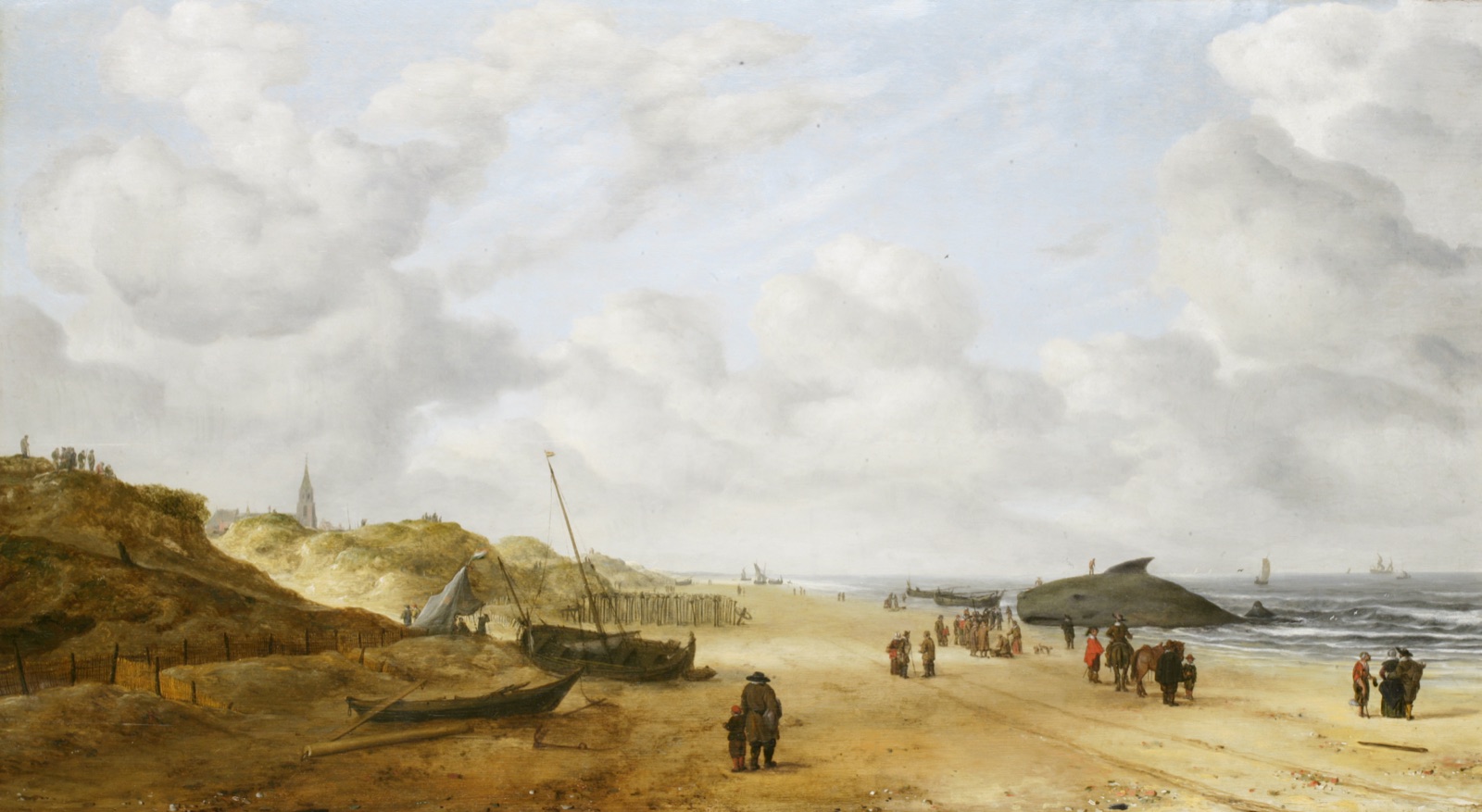
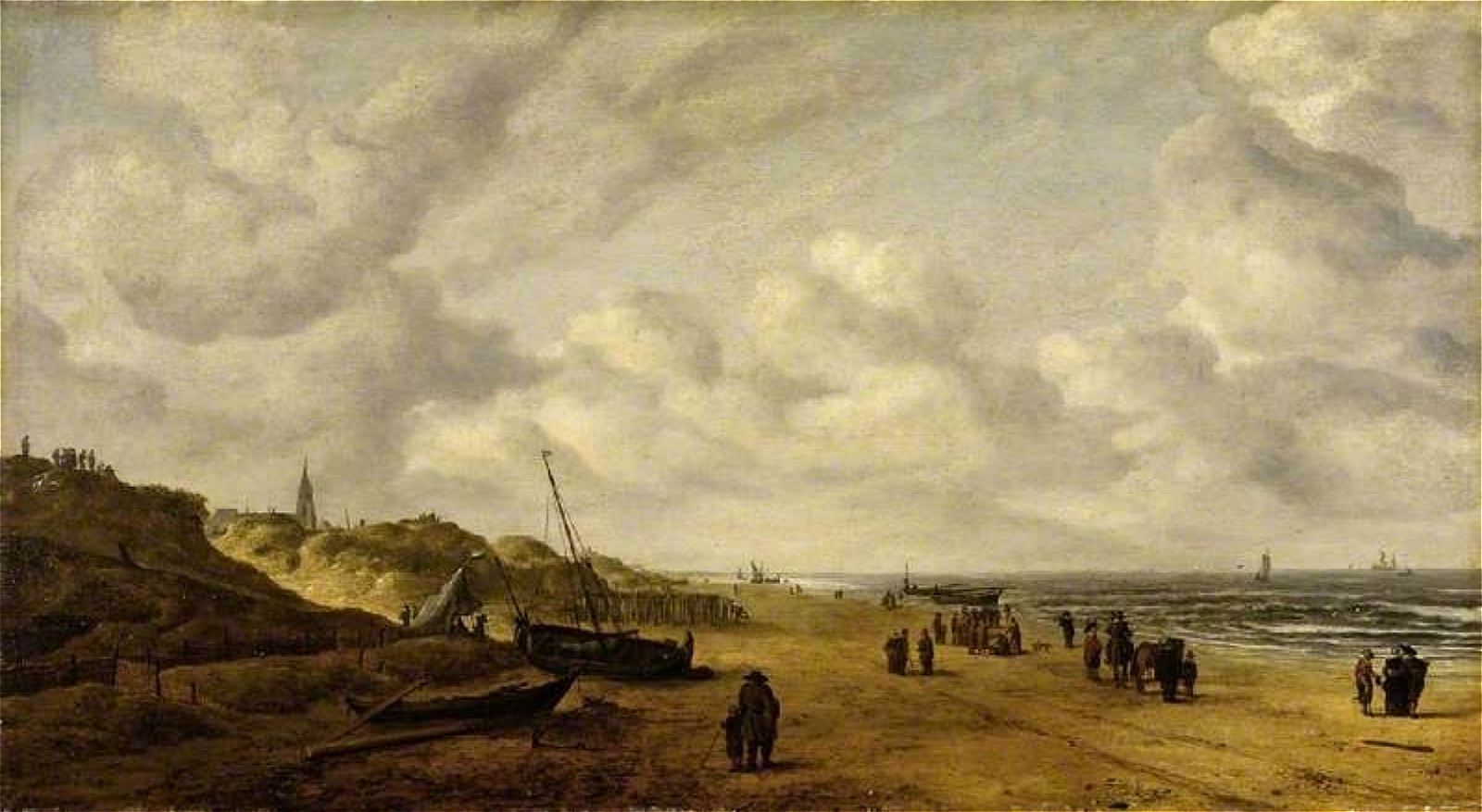
That distinction between removing a route and destroying a record is, I think, the most useful thing the law has to teach the rest of this essay. Legal forgetting usually changes what is easy to reach. It rarely changes what exists. The painting that runs through this essay shows the difference. For well over a century, visitors to the Fitzwilliam Museum in Cambridge saw a crowd on a Dutch beach looking at nothing in particular, because someone, probably in the eighteenth or nineteenth century, had painted over the whale they had come to see. In 2014 a conservator cleaning the picture, Shan Kuang, found it again underneath (University of Cambridge, 2014). The whale had only been covered, so the distinction was still there to recover.
Forgetting by covering has a cost too. My last essay turned on a court record from 1783, the case of the slave ship Zong, which survives because a dispute about an insurance claim was written down (Gregson v Gilbert, 1783; Walvin, 2011). Archives are how the powerful are held to account long after they would prefer to be forgotten. A right to be forgotten will sometimes be used to bury things others need to find, and the people who can most easily afford to have their past made hard to reach are rarely the ones the past has wronged. Costeja’s own case has an irony on this point: because of the ruling, his old debts are now described in law textbooks across Europe.
What Funes could not do
Borges ends the story quietly. Funes dies young, in 1889, of congestion of the lungs, still in his dark room with everything he could not stop seeing. I used to read the story as being about a strange gift. Now I read it as a story about a missing tool. Funes had a perfect record and no way to decide which distinctions were worth keeping.
His problem outlived him. It has become an engineering problem. We are now building AI systems meant to remember across years: every conversation, preference, purchase, correction and mistake. Soon, forgetting may no longer be something that simply happens to a mind. It will be a choice made in code.
My small result this summer contained a larger warning. Two bits were enough to keep what mattered for guessing the next round’s errors. But “what mattered” depended entirely on the question I had asked. A memory designed to predict the next syndrome might throw away exactly what an engineer later needs to understand why the machine failed. There is no perfectly relevant memory without first choosing a future for it to serve.
That is also why forgetting becomes political. Costeja’s debt could be irrelevant to the life he was trying to get on with and still matter to a historian. The record of the Zong began as an insurance dispute and is now read as evidence of an atrocity. Information does not arrive labelled “keep” or “discard”. Someone chooses what the future will be allowed to ask of it.
Landauer tells us that erasing a distinction has a physical price. The law reminds us that keeping one can have a human price. The machines we are building will live between those two costs, asked to forget enough to think and to remember enough to stay answerable.
One day, a machine will decide that something about us no longer matters. Whether that is the first sign it understands us, or the first thing we can never recover, will depend on whose future it was built to predict.
References
- Bennett, C.H. (1982) ‘The thermodynamics of computation: a review’, International Journal of Theoretical Physics, 21(12), pp. 905–940.
- Bérut, A., Arakelyan, A., Petrosyan, A., Ciliberto, S., Dillenschneider, R. and Lutz, E. (2012) ‘Experimental verification of Landauer’s principle linking information and thermodynamics’, Nature, 483, pp. 187–189.
- Borges, J.L. (1942) ‘Funes el memorioso’, La Nación, Buenos Aires. English translation by J.E. Irby, ‘Funes the Memorious’, in Labyrinths (1962). New York: New Directions.
- Court of Justice of the European Union (2014) Google Spain SL and Google Inc. v Agencia Española de Protección de Datos and Mario Costeja González, Case C-131/12, judgment of 13 May 2014.
- Czartowski, J. and Binder, F.C. (2026) ‘Energetic costs of subspace quantum error correction’, arXiv:2609.03825.
- Gregson v Gilbert (1783) 3 Doug KB 232.
- Knott, C.G. (1911) Life and Scientific Work of Peter Guthrie Tait. Cambridge: Cambridge University Press (prints Maxwell’s letter to Tait of 11 December 1867).
- Landauer, R. (1961) ‘Irreversibility and heat generation in the computing process’, IBM Journal of Research and Development, 5(3), pp. 183–191.
- Luria, A.R. (1968) The Mind of a Mnemonist: A Little Book about a Vast Memory, trans. L. Solotaroff. New York: Basic Books.
- McCloskey, M. and Cohen, N.J. (1989) ‘Catastrophic interference in connectionist networks: the sequential learning problem’, Psychology of Learning and Motivation, 24, pp. 109–165.
- McEwen, M. et al. (2022) ‘Resolving catastrophic error bursts from cosmic rays in large arrays of superconducting qubits’, Nature Physics, 18, pp. 107–111.
- Regulation (EU) 2016/679 (General Data Protection Regulation), Article 17, ‘Right to erasure (“right to be forgotten”)’.
- Richards, B.A. and Frankland, P.W. (2017) ‘The persistence and transience of memory’, Neuron, 94(6), pp. 1071–1084.
- Still, S., Sivak, D.A., Bell, A.J. and Crooks, G.E. (2012) ‘Thermodynamics of prediction’, Physical Review Letters, 109, 120604.
- Szilard, L. (1929) ‘Über die Entropieverminderung in einem thermodynamischen System bei Eingriffen intelligenter Wesen’, Zeitschrift für Physik, 53, pp. 840–856.
- Tishby, N., Pereira, F.C. and Bialek, W. (2000) ‘The information bottleneck method’, arXiv:physics/0004057.
- University of Cambridge (2014) ‘Whale tale: a Dutch seascape and its lost leviathan’, research news, cam.ac.uk.
- Walvin, J. (2011) The Zong: A Massacre, the Law and the End of Slavery. New Haven: Yale University Press.
The summer work behind section II has a page of its own. The essay before this one, on how insurance learned to price the future, is The Economy of Things That Never Happened.