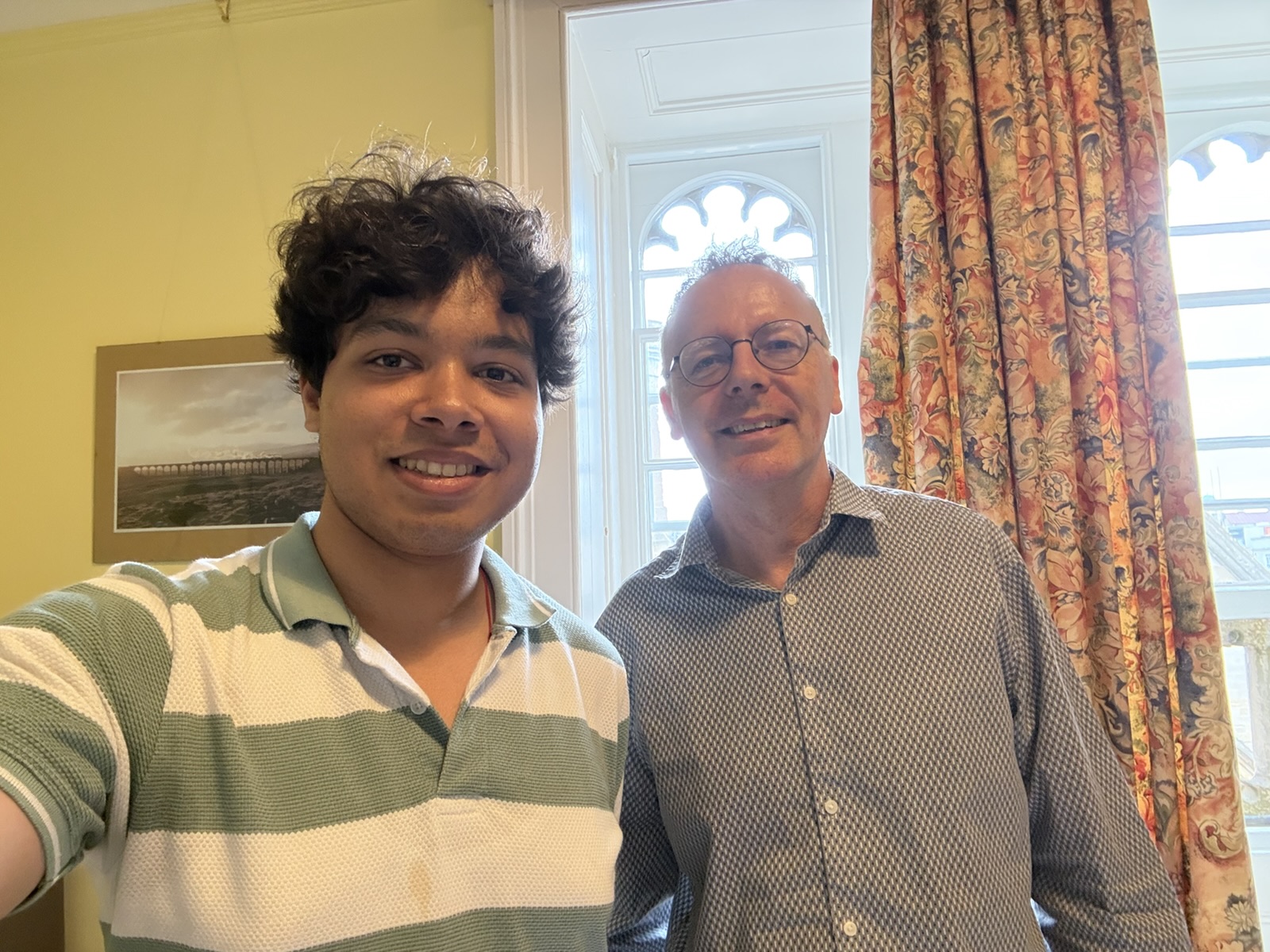
How it started
Correcting an error is not the same as making its information disappear. After Prof Andrew Steane’s quantum computer science course at Exeter College, Oxford, I kept asking a quieter question. When error correction removes entropy from a quantum state, where does it go, and what has to be reset?
What I did
I enumerated all 16,384 Pauli error patterns of Steane’s code and the information carried by its 64 syndromes. From them I derived the leading small-noise law for the syndrome entropy, H = (|D1|/3) p log2(1/p) + O(p). With it comes the information-erasure cost. Then I built a scaling argument for LDPC codes. I checked surface codes of distance 3, 5 and 7 with independent decoders and reproducible runs.
What changed my mind
Showing that the code corrects errors was the easy half. Accounting for where the entropy goes is the half that stays open.