Projects.

Questions that escaped into the world. A few became products, one became a paper, and one began during midterms.

Startup2025 - nowWorking product

Rentably

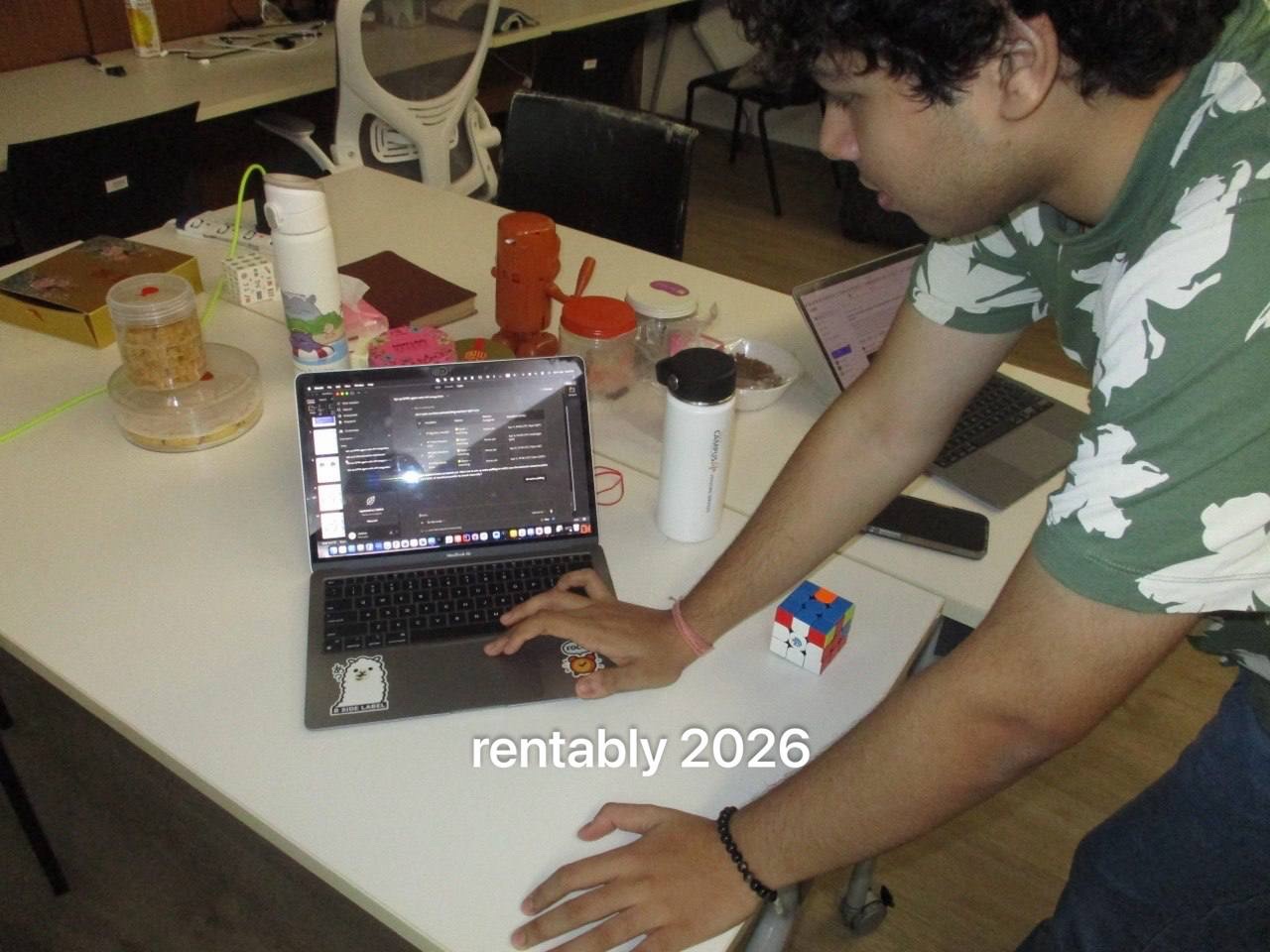
Your AI agent can plan your whole day. When a pipe leaks at 11pm, all it can do is text you and hope. Matthias and I built Rentably so it can send someone instead. A person nearby takes it, paid only when photos prove the job is done. The whole path works today, from the request to the match, the evidence, the dispute and the payment. It won the S$10,000 RC4 pitch fund and was featured in Lianhe Zaobao.
Read the full story rentably.ai Zaobao feature
Ambar at a laptop, building Rentably
How it started What happens when an AI agent reaches the edge of the laptop?
What changed my mind We had designed a whole financial system for AI agents. Then we asked whose problem it solved today, and parked it.
Climate experiment2026Working prototype

Planet Out Loud

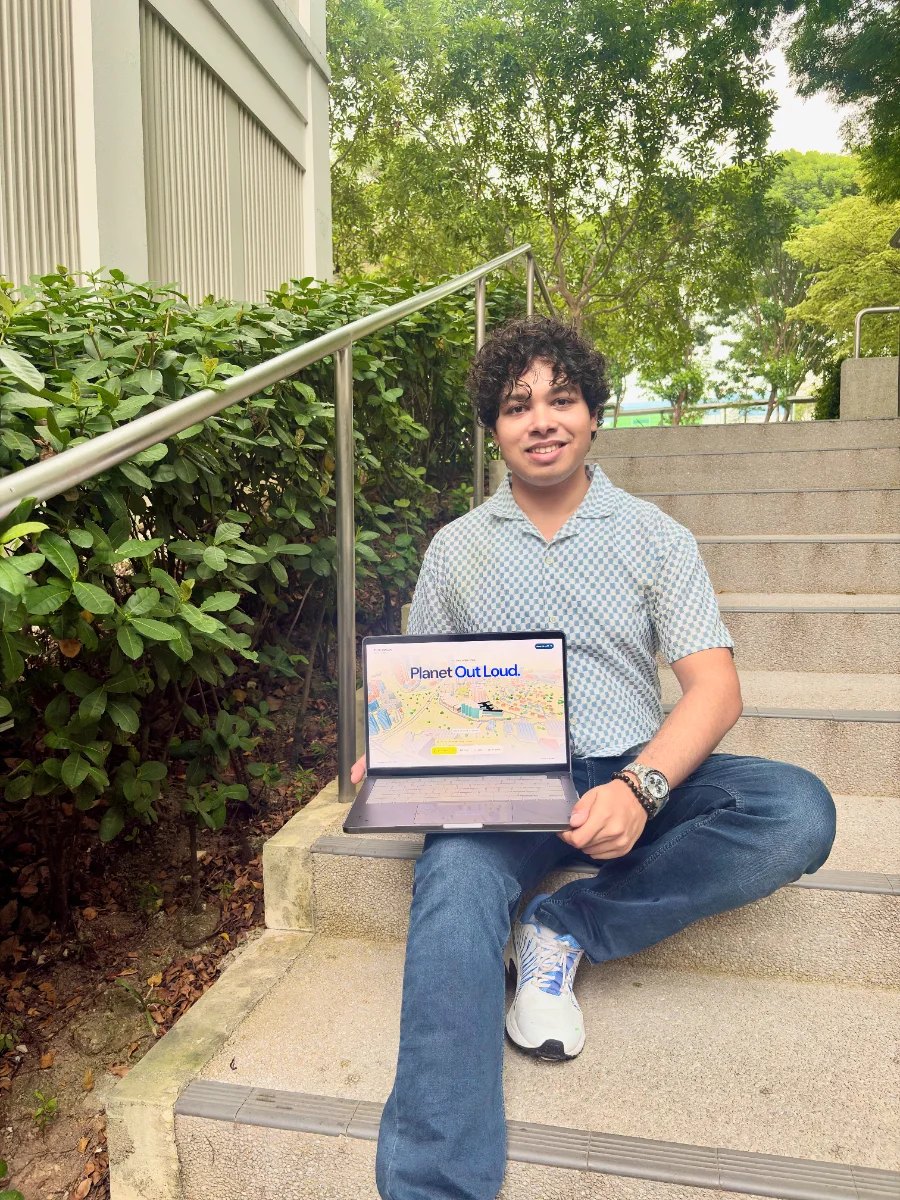
1.5°C is a number nobody can picture. The campus you walk every day is a place everyone can. So I built a 3D NUS you can drive through. Air-quality readings and small climate games start on streets people already know. It began on 14 September 2026, when my residential college warned that the PSI had crossed 100. NUS Computing wrote it up eleven days later, and in October the haze came for days on end.

Read the full story
Ambar on the steps at NUS, holding a laptop that shows Planet Out Loud
How it started If “1.5°C” feels impossibly large, could a familiar campus make the consequences easier to see?
What changed my mind A global dashboard would have been more complete. A campus people already knew was the one they could see.
ExperimentPi Day 2026Live

PiDayFest

Pi Day landed in the middle of midterms, and I wanted to know whether my name was hiding inside π. Five days later anyone could search 200 million digits for their own name. There were small mathematical surprises too, and a 314-character JavaScript code-golf challenge. NUS Computing and NUS CDE featured it. The result I liked more was watching a silly question make other people curious.

Read the full story pidayfest.com

This was meant to take one weekend.

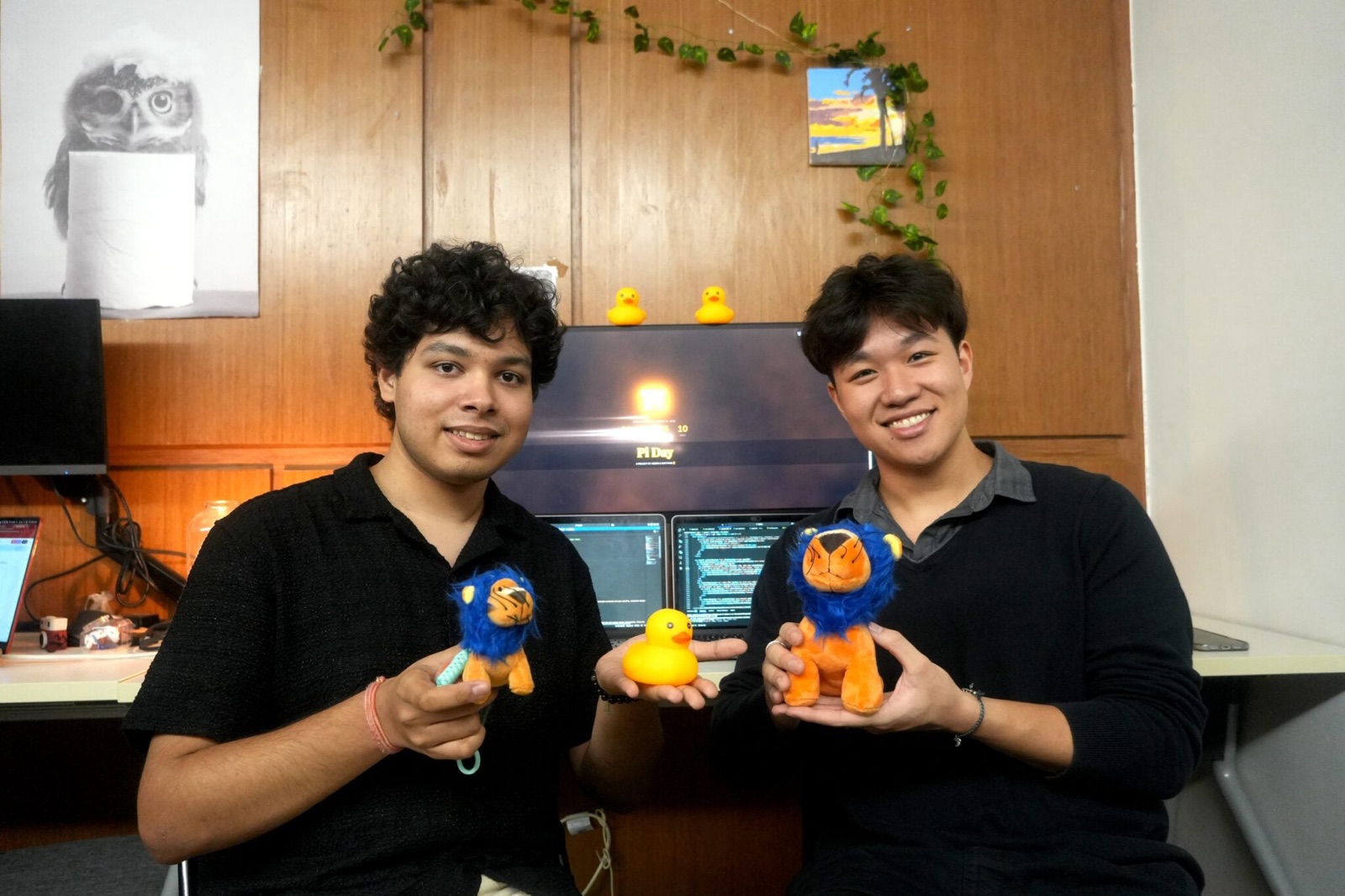
Ambar and Matthias with the PiDayFest toys, photographed by NUS Computing
How it started Pi Day arrived during midterms, which was apparently enough justification.
What changed my mind People did not need a mathematics lesson first. They needed a reason to look.
ResearchISDC 2026Presented

Borrowed Time

In Nepal's hills, a family swaps grain for vegetables to sell. The first years look like success. But the old safety net wears away faster than the new income grows, and the usual monitoring only sees the good start. With Prof Navarun Varma, Erica Udas and ICIMOD collaborators, I traced that pattern across Nepal, Myanmar and Bhutan and called it the Delayed Reward Trap. A paper is easy to ignore, so I built a tool practitioners can try their own plans on. It was presented at ISDC 2026 in Delft, and ICIMOD is adopting the tool.

Read the full story
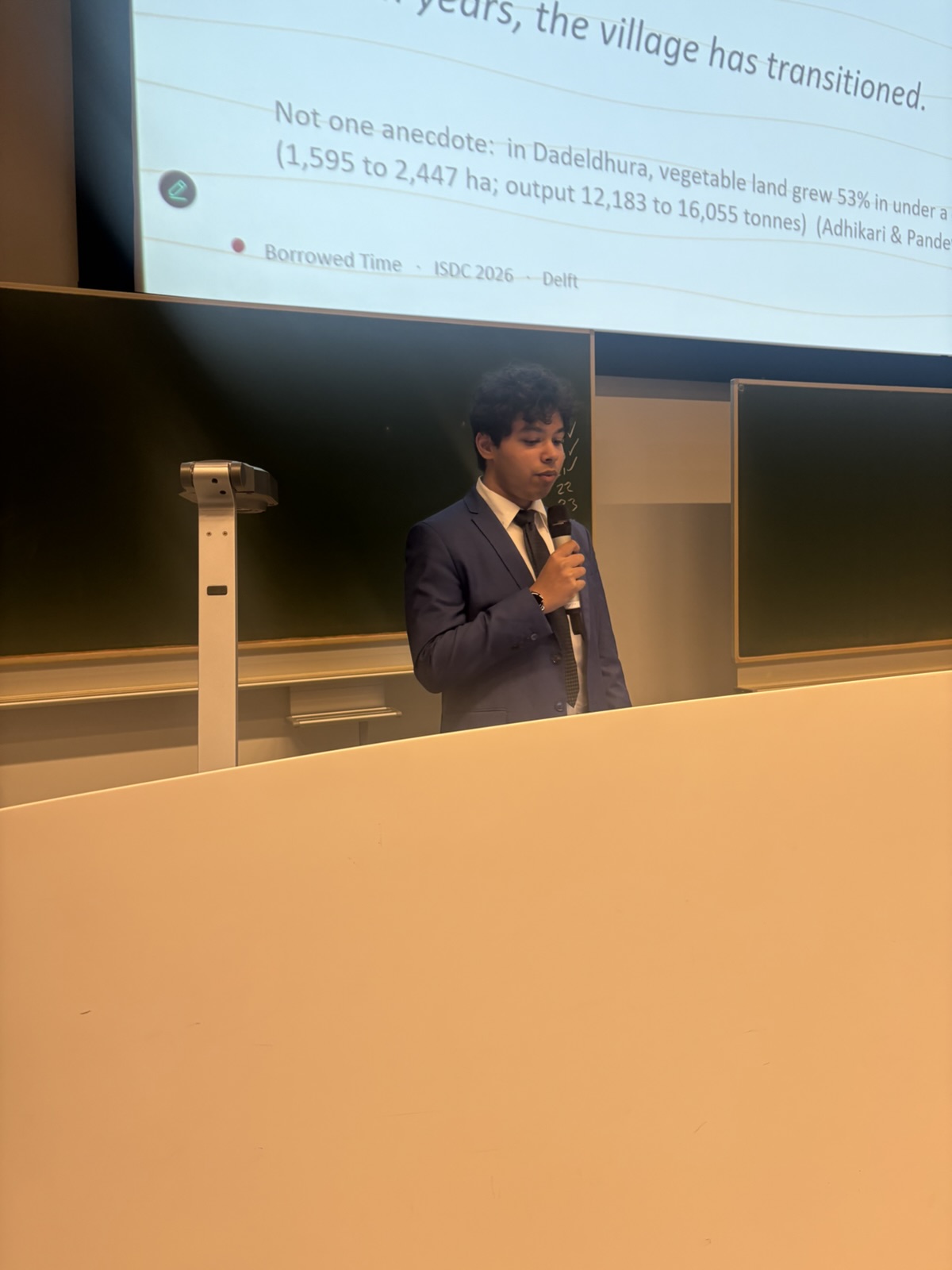
Ambar presenting Borrowed Time at ISDC 2026 in Delft
How it started If the early numbers look good, why do some mountain families end up worse off?
What changed my mind A paper is read once. A tool practitioners can push on keeps teaching, and that is the part ICIMOD picked up.
Retrieval systemTikTok TechJam 2026Evaluated

TENFOLD

You change your mind halfway through shopping. “Cheaper. No, the blue one.” Most search boxes forget the first half. TENFOLD remembers. It handles revisions, reversals and clarifications across 50,000 products, with no model calls and no network access. The right product sat in the top ten 97.5% of the time (195 of 200 sessions; 0.846 MRR). The organiser’s own unmodified evaluator scored it 0.902 against a 0.107 baseline. A harder test found a real defect. After the fix, it kept 80% of its score on that test instead of 50%.

Read the full story

My own harder test found the bug.

TikTok TechJam 2026
How it started Could a shopping engine handle a change of mind without asking a language model to think for it?
What changed my mind The polite benchmark passed. Messy paraphrases found the bug.
Independent research2026Ongoing

The Thermodynamic Cost of Quantum Error Correction

Correcting an error is not the same as making its information disappear. After Andrew Steane’s course I kept asking a quieter question. When error correction removes entropy from a quantum state, where does it go? And what has to be reset? I enumerated 16,384 Pauli patterns and 64 syndromes and derived the low-noise syndrome entropy. Then I tested the scaling arguments on surface codes of distance 3, 5 and 7. This is ongoing independent research, not a claim of a new thermodynamic limit.

Read the full story

Ask me why this has 64 syndromes.

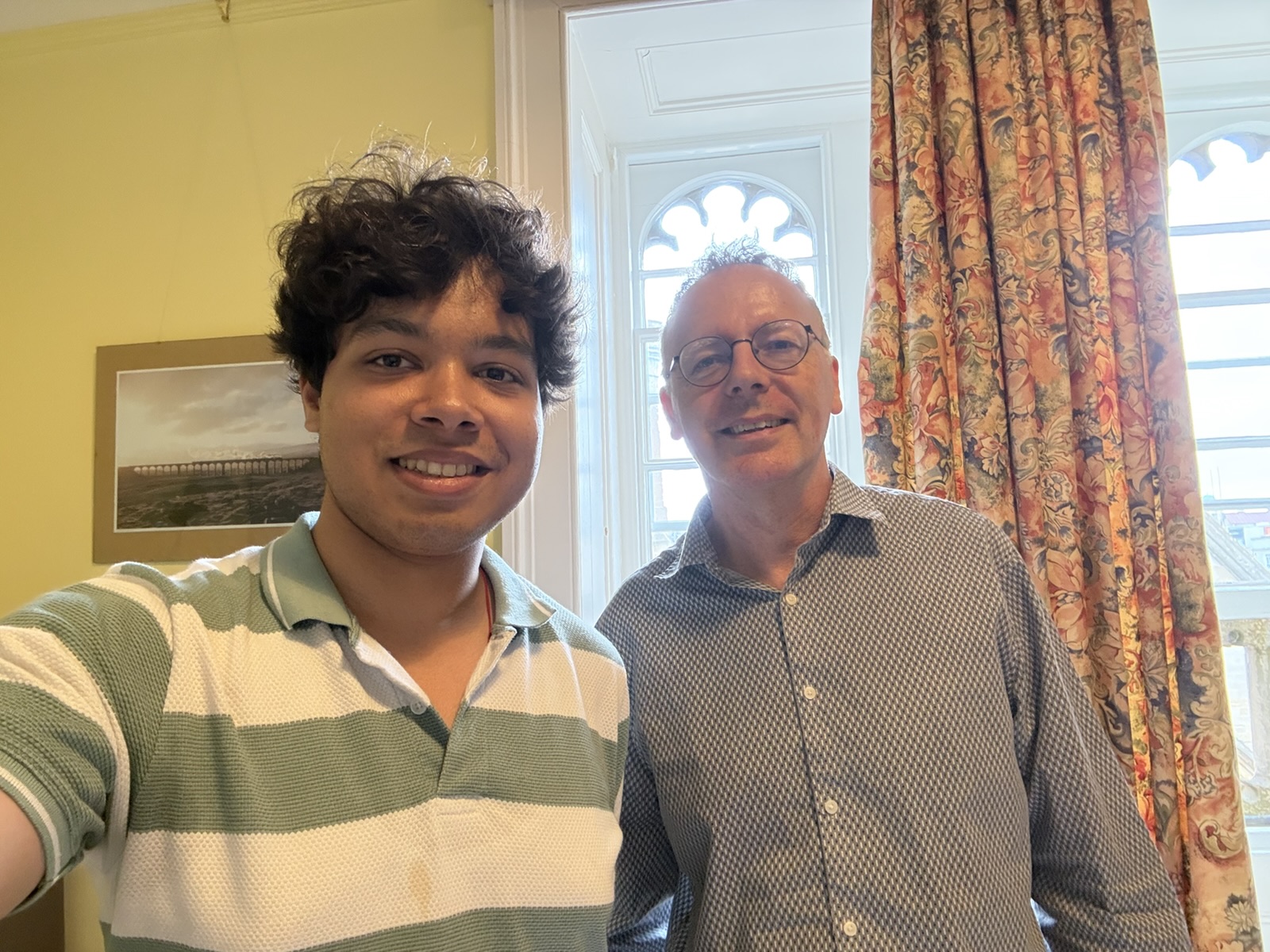
Ambar with Prof Andrew Steane after a tutorial at Oxford, summer 2026
How it started Correcting an error is not the same as making its information disappear.
What changed my mind Showing that the code corrects errors was the easy half. Accounting for where the entropy goes is the half that stays open.