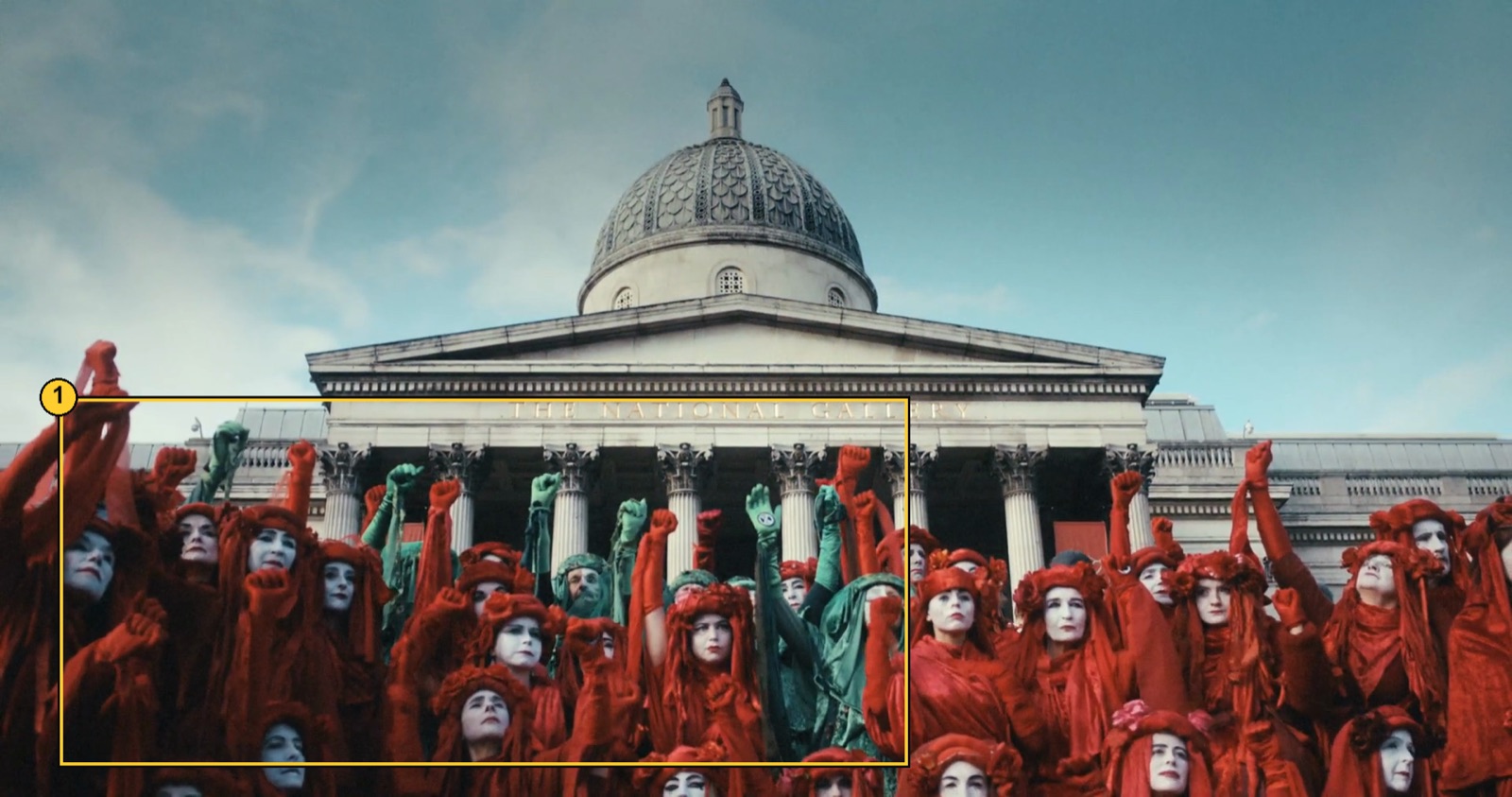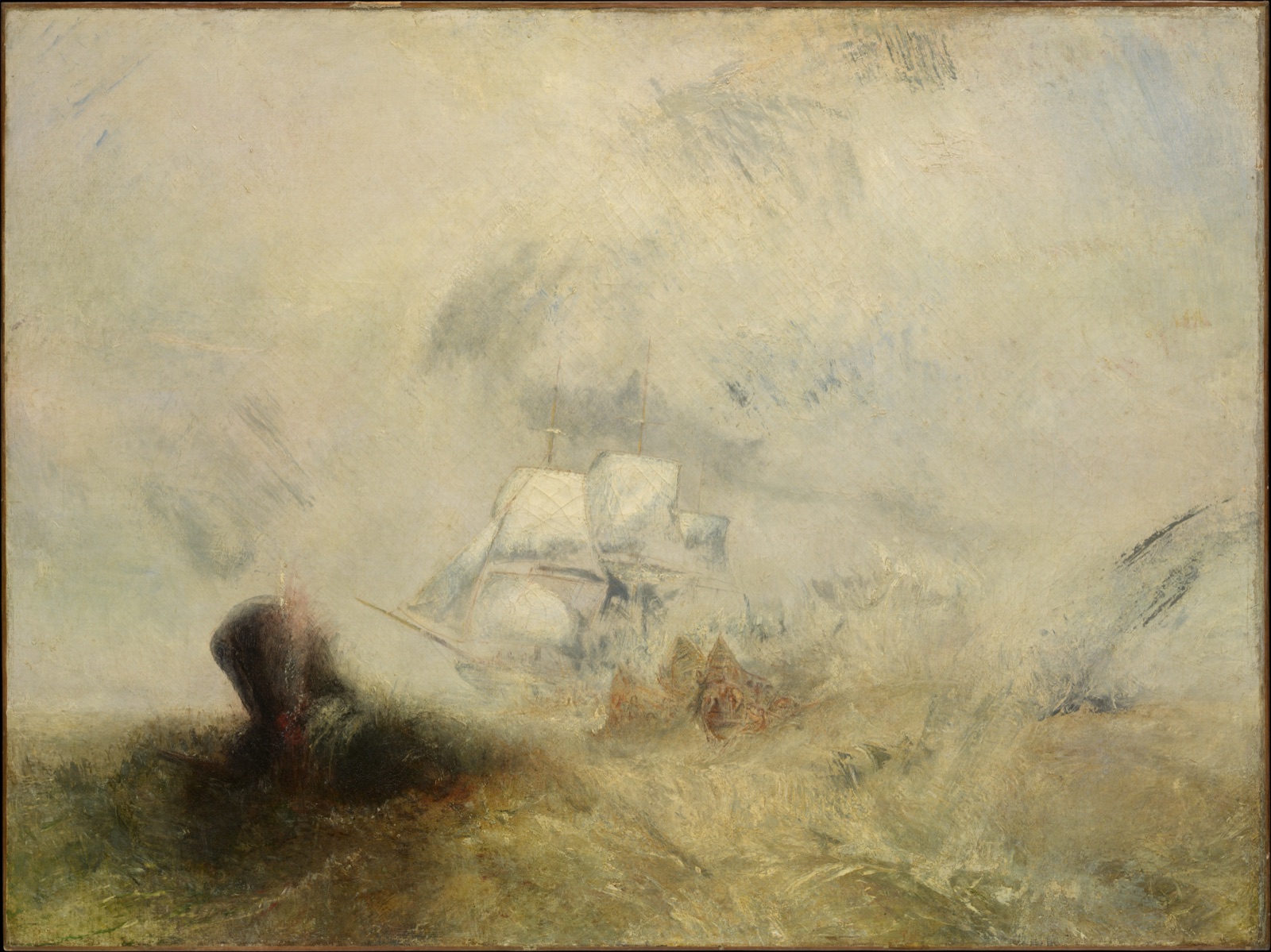
“There is no such thing as ‘away.’ When we throw anything away it must go somewhere.”
— Annie Leonard
In Puchuncaví, Chile, Sara tastes the air. She has lived for decades beside one of the country’s largest industrial complexes, and when the wind carries emissions from the copper smelter towards her home she knows it before any instrument tells her. The bitterness reaches her lips, and she knows what it will do to her chest and how the day will have to be organized around it (Tironi, 2018). After long enough, the distinction between a body exposed to pollution and a body that knows pollution begins to collapse. Sara’s lungs and tongue have become, at once, its victims and its instruments.
I kept returning to that while reading Rebecca Giggs on stranded whales and Camelia Dewan on shipbreaking in coastal Bangladesh. A whale carcass, a retired ship and a person living beside an industrial site seem at first to have little in common, but each keeps something of the world that has passed through it. The Anthropocene, in these accounts, does not only surround bodies as an external environment in which damage happens. It enters them, accumulates, and sometimes remains long after the event that put it there is forgotten. What matters politically is what happens next: whether that contamination is treated as an exceptional problem to be contained, or whether it simply becomes the ordinary environment someone else is expected to live inside.
Giggs describes a young humpback stranded on a beach near Perth whose suffering could not simply be ended with euthanasia drugs. The barbiturate sometimes called the “Green Dream” does not disappear when the animal dies; it stays in the carcass and can poison whatever later feeds on it. In one case she recounts, a dog fell into a coma after eating blubber from a whale killed twenty-three days earlier (Giggs, 2020). Even an act intended as care acquires another timescale: ending one animal’s suffering may pass the chemical elsewhere. Giggs writes about a whale’s death as something dispersed across places and durations, and the whale carries an industrial history that is not written on it while it swims, becoming legible only when the body strands, dies or is cut open.
Something similar happens to ships, though the geography is far less accidental. A vessel that reaches the beaches of Sitakunda in Bangladesh has spent decades accumulating its own material history: asbestos in insulation, heavy metals in paint, PCBs and oil residues in the structure. Its working life belonged to a global economy, but its death is remarkably local. Workers cut the hull apart by hand, and what had been safely enclosed inside a moving ship begins to travel again, into workers’ bodies, coastal water, fishing grounds and the network of tides, canals and humid air that Dewan calls a “fluid commons” (Dewan, 2023).
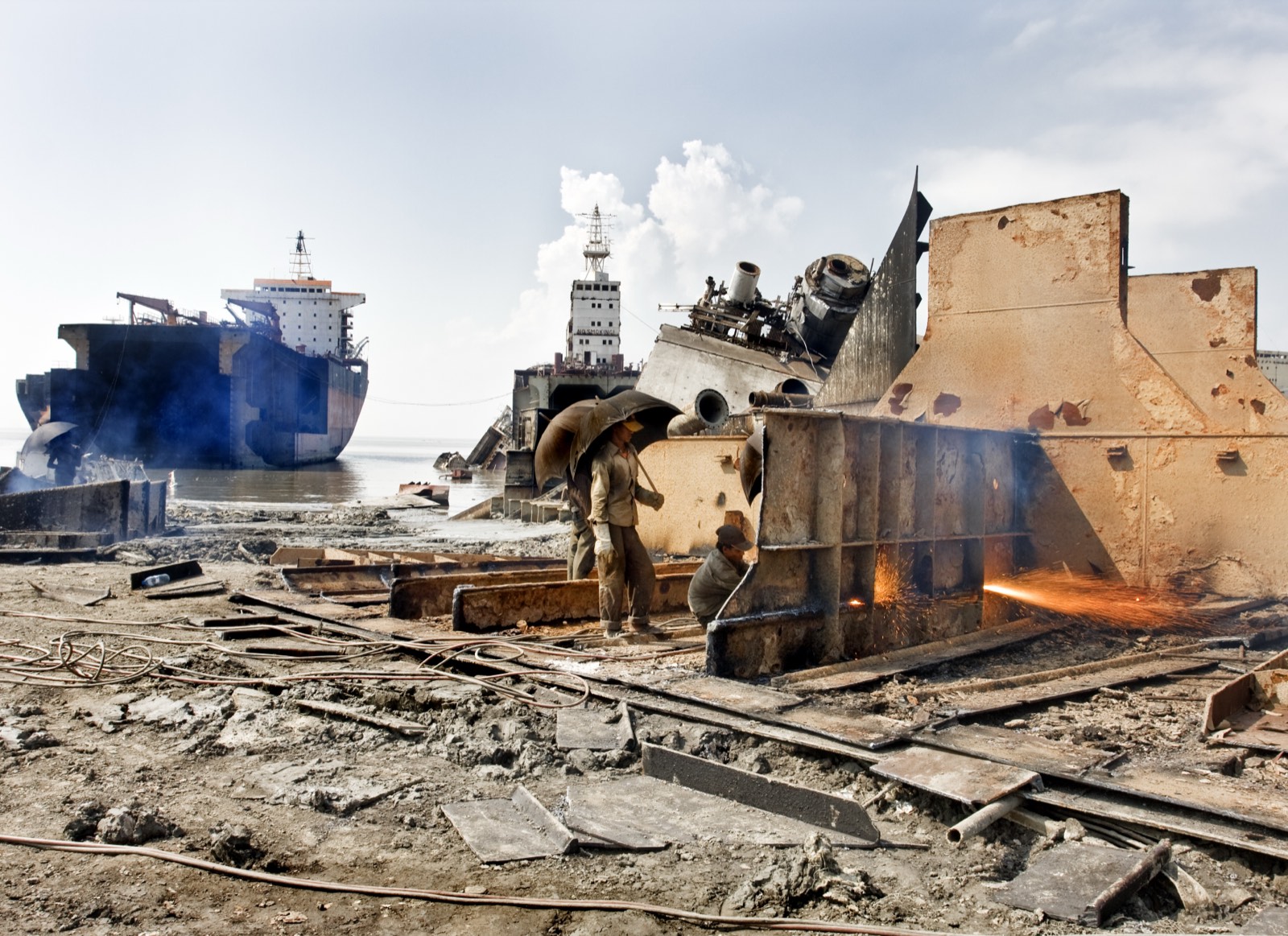
The phrase matters because pollution refuses the boundaries that make the industry look manageable. A shipbreaking yard can be marked on a map and owned as property; contaminated water does not stay inside its fence, and neither does air. The Zele fishing communities Dewan describes may never have worked in the yards and may see none of the wages, yet the residues enter the commons their lives depend on. This is why she calls it “more-than-economic dispossession”: people can remain exactly where they are and still lose the conditions that made remaining there possible.
Michelle Murphy’s phrase, quoted by Dewan, that pollution joins “the molecular fabric of our bodies,” pushes this further. Mary Douglas famously described dirt as “matter out of place,” showing how ideas of pollution are organized through systems of classification (Douglas, 1966). But these cases also expose the limits of a purely classificatory account. The asbestos fibre in a lung is not troubling because it has been misfiled. It is physically there. The body has kept it.
And yet not every contaminated body is treated the same way, and this was the comparison I found hardest to shake. On Australian coasts a stranded whale is an interruption. Authorities arrive and debate whether it can be saved or euthanized; carcasses may be cut apart under a “beach and bundle” policy, and Giggs describes one case in which removing a dead humpback to a municipal tip cost around A$188,000 (Giggs, 2020). The whale’s body has become a recognized public problem.
The retired ship arrives at Sitakunda for almost the opposite reason: taking responsibility for its remains is cheaper there. The same economy that treats a whale carcass as exceptional waste sends the ship to be dismantled where labor is cheap, protections weak, and communities have little power to demand containment. This geography is not accidental. Wealthier countries benefit from global shipping, but when those ships become old and toxic, the dangerous work of dismantling them is pushed elsewhere. Sitakunda is useful to the industry precisely because the human and environmental costs of disposal can be absorbed there more cheaply than in the countries that benefited from the ships during their working lives.
This is where the bodies diverge most sharply. A whale carcass can become a waste-management problem; a retired ship can be exported for dismantling. The exposed human body has no comparable moment of disposal. A worker at Sitakunda or a resident of Puchuncaví has to go on living while exposure becomes part of the conditions of life, because the environment is contaminated too, and the person must still breathe, drink, eat and work within it.
Tironi’s account of Puchuncaví is useful precisely because he refuses to make endurance look heroic. Resistance there often consists of practices so small they could be mistaken for housekeeping. People sweep the fine industrial dust, the polvillo, from terraces even though it will return; they wet the ground so poisoned soil does not lift. Tironi calls these “hypo-interventions”: minimal, intimate practices of caring and cleaning that do not remove the structures producing harm but make life within them possible (Tironi, 2018).
There is something uncomfortable about calling this resilience. The word can make survival sound like “success”. Worse, resilience can become an alibi for neglect: the more effectively people learn to inhabit damaged conditions, the easier it becomes for institutions to treat those conditions as survivable. Endurance then risks becoming evidence, not of injustice, but of adaptability. These women have learned to live with toxicity, but their ability to do so should not become an excuse for the conditions that require such knowledge. Sara’s tongue does not produce a pollution index, but it tells her when to close a window. Care here does not mean returning a damaged body to some earlier, uncontaminated state. It means sustaining life in the absence of that possibility.
The whale cannot resist in this sense; it cannot demand that anyone remove the chemicals stored in its tissue. But its ruined body can still expose them. The stranded carcass makes visible in one place a chemical history that had previously been dispersed across ocean, food chain and time. Puchuncaví’s residents do something similar while still alive, reading an industrial history through coughs, tastes, dust and routines.
The Anthropocene’s damage is often described at planetary scale, but nobody inhabits a planetary average. Damage has to arrive somewhere. It enters a whale’s blubber, a shipbreaker’s lungs, a fishing ground, a terrace that must be swept again tomorrow. The larger structures are global, but their residues become intimate.
The question, then, is not only which bodies are damaged, but which damaged bodies become somebody’s responsibility. A stranded whale on an Australian coast becomes a public problem to be managed and removed. A dead ship from the Global North becomes employment on a Bangladeshi beach, even as the same wage-producing act spreads asbestos and heavy metals through the surrounding commons. A toxic cloud in Puchuncaví becomes so ordinary that residents learn its taste.
All three bodies carry histories they did not author. But power determines what happens when that history becomes impossible to ignore. Some contaminated bodies are recognized, bounded and removed as public problems. Elsewhere, people are asked to make a life inside the contamination itself. That may be the harder lesson in calling the body an archive: an archive is not simply a place where the past is kept. It is also a place somebody has decided the past is allowed to remain.
References
- Dewan, C. (2023) “Toxic Residues in Fluid Commons: More-Than-Economic Dispossession and Shipbreaking in Coastal Bangladesh.” Ethnos.
- Douglas, M. (1966) Purity and Danger: An Analysis of Concepts of Pollution and Taboo. London: Routledge.
- Giggs, R. (2020) Fathoms: The World in the Whale. London: Scribe.
- Tironi, M. (2018) “Hypo-interventions: Intimate Activism in Toxic Environments.” Social Studies of Science, 48(3), pp. 438–455.
Written for Prof Ann Kelly’s course on anthropology and climate change at Exeter College, Oxford, during the Exeter College Summer Programme 2026.
More on climate: the climate page.