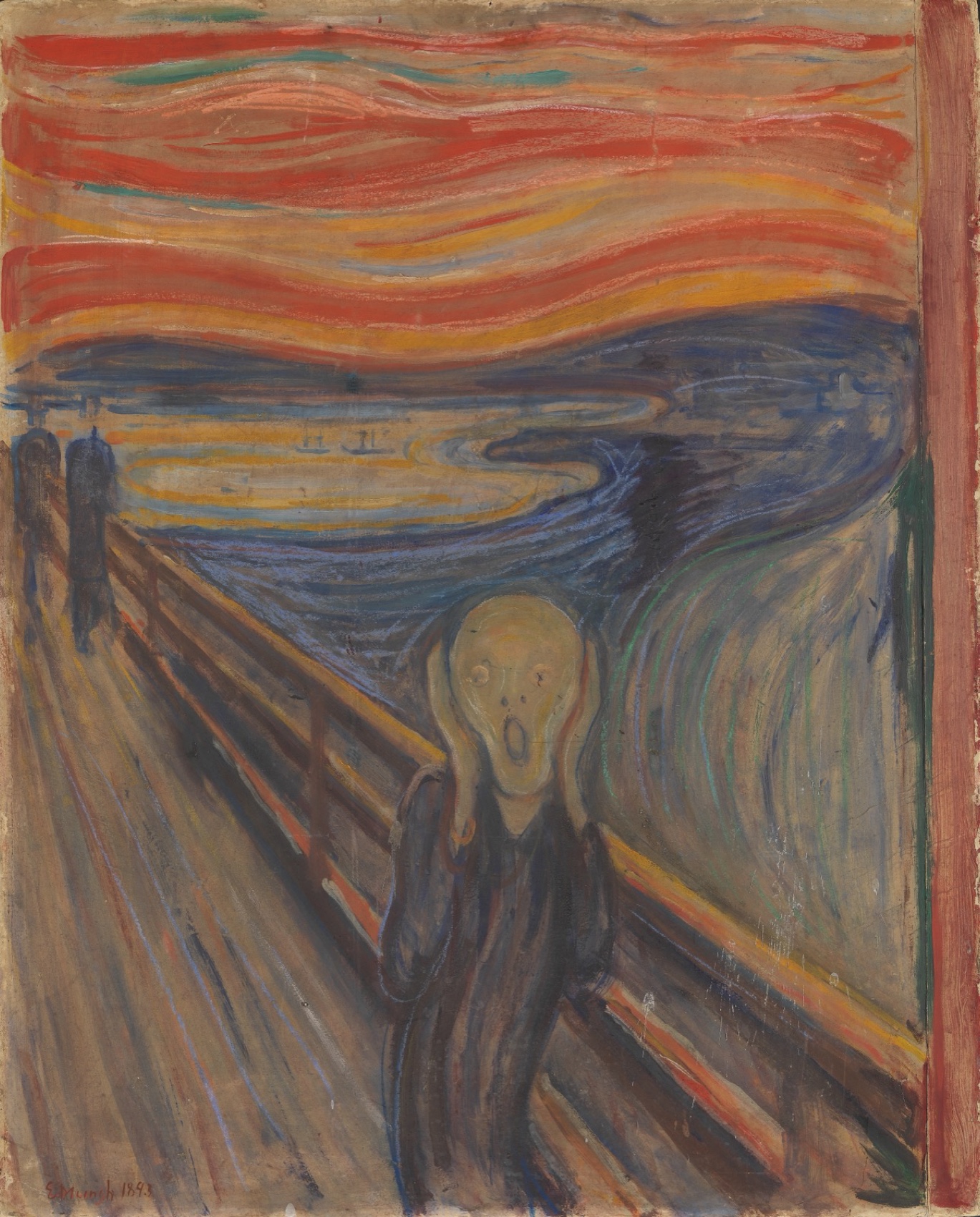
“An eccentric environmental scare… that grew into a powerful global industry.”
— the opening narration of Climate: The Movie (Durkin, 2024)
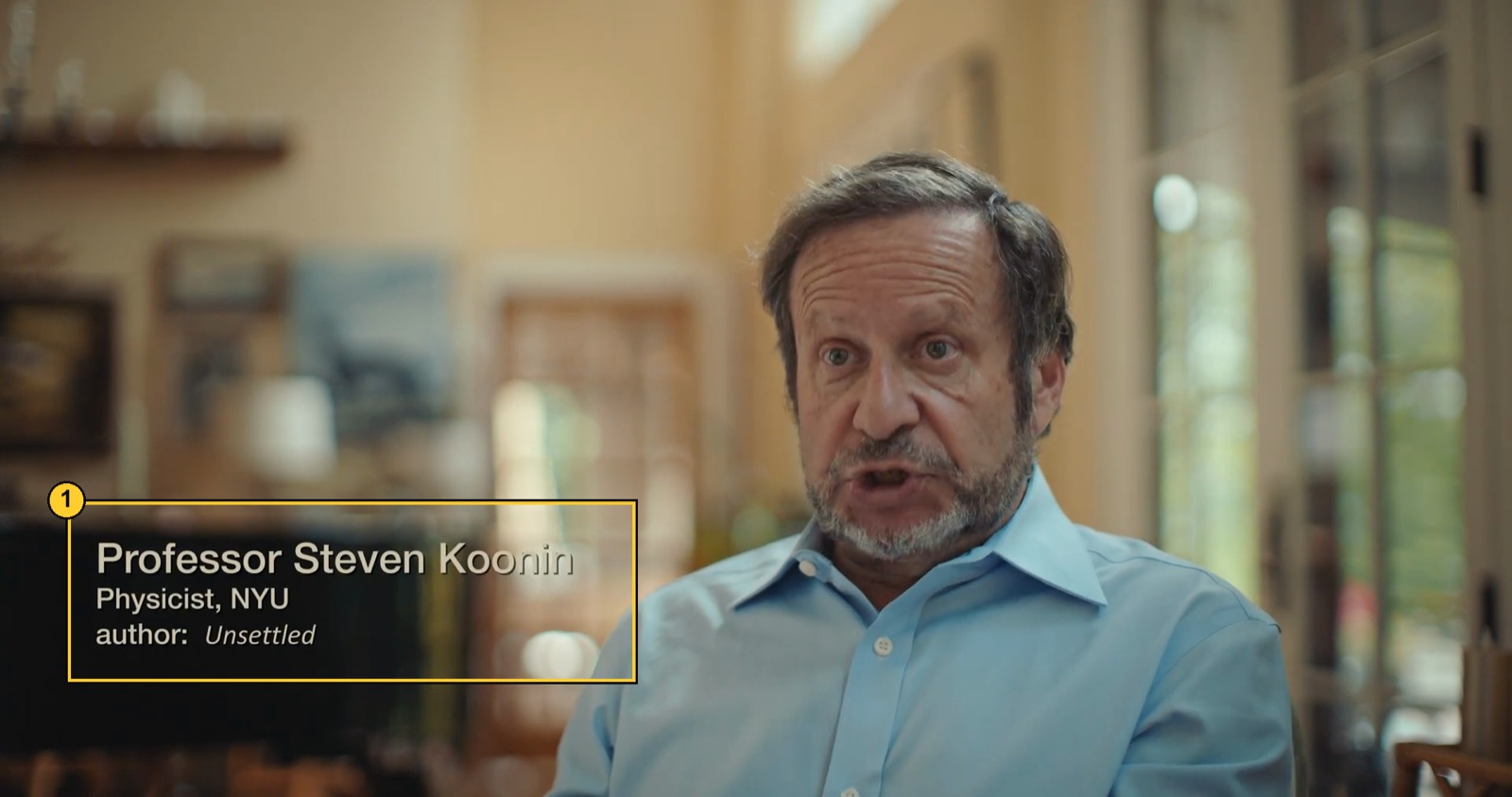
Climate: The Movie (The Cold Truth), written and directed by Martin Durkin, produced by Tom Nelson, released free online on 21 March 2024, running about eighty minutes. It features Steven Koonin, Richard Lindzen, William Happer and the 2022 Nobel physicist John Clauser, among other scientists, most of them working outside climate science.
Primary link (film): https://www.youtube.com/watch?v=A24fWmNA6lM
Companion artifact (hosting article plus comment thread): https://wattsupwiththat.com/2024/03/20/climate-the-movie-watch-here/
The WUWT repost carries 433 comments and a 4.9 rating.
2. Some Observations and Annotations
Six frames from across the film:
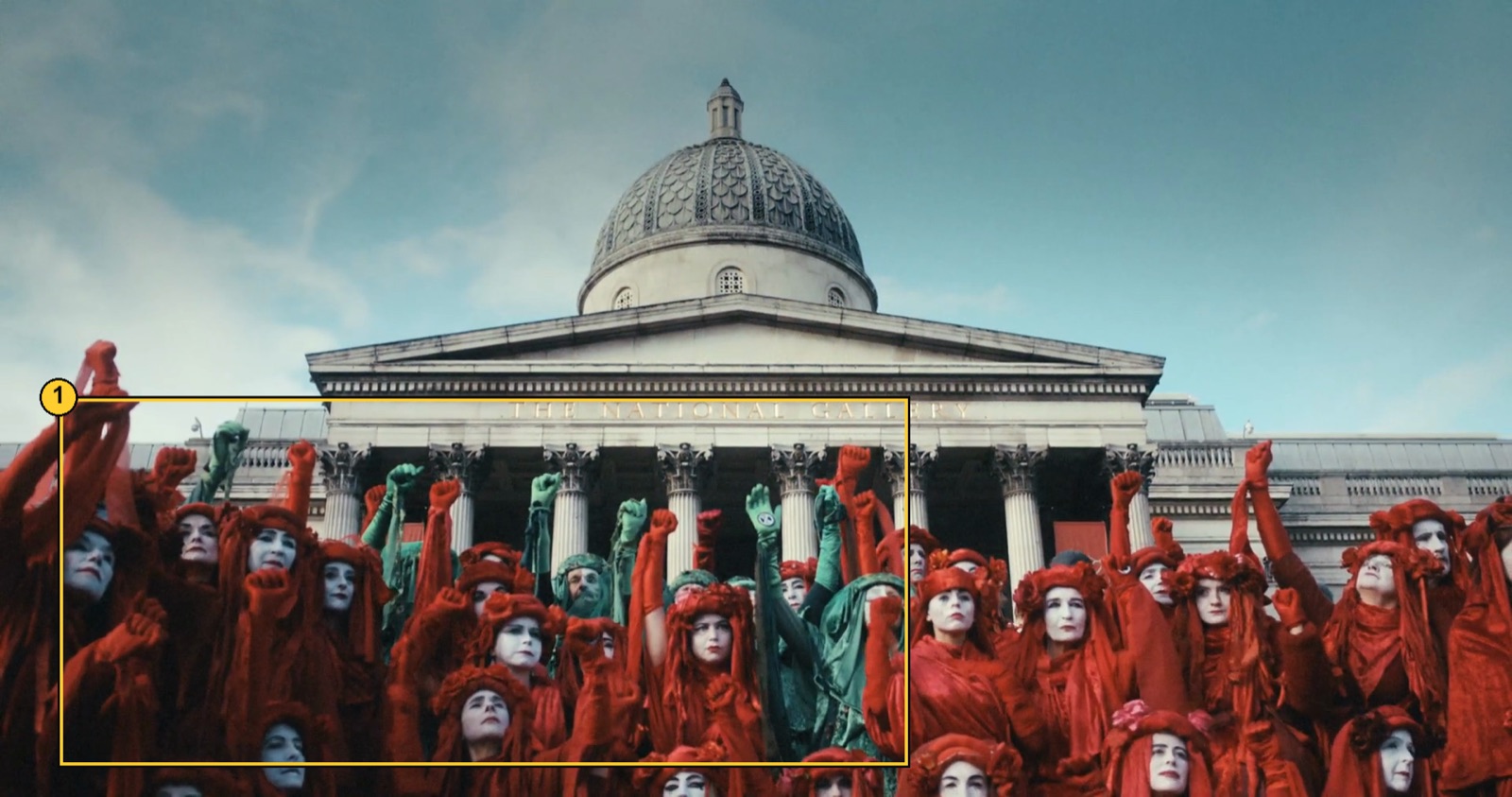
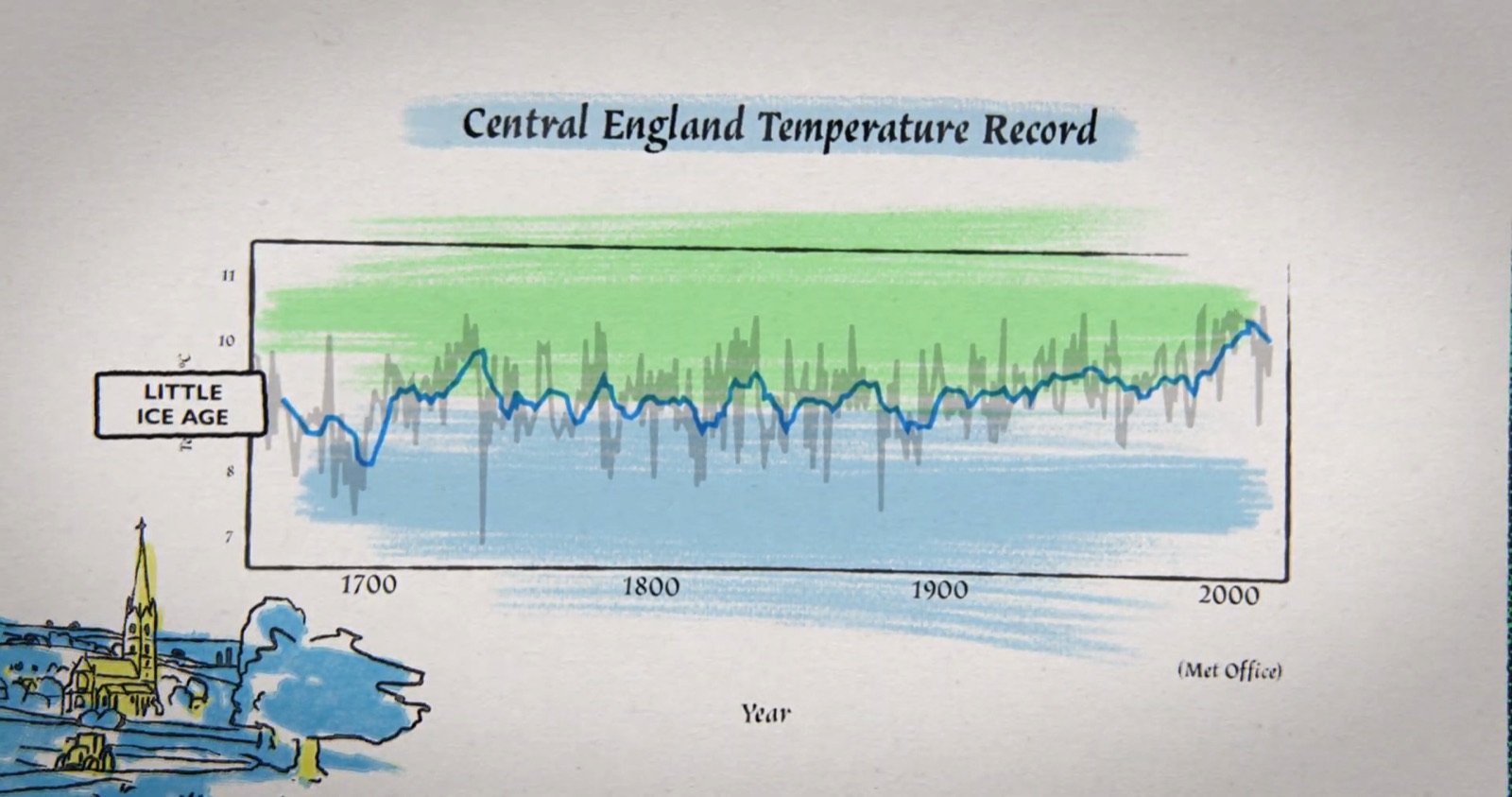
Two further moves are patterns rather than single frames:
- The second escape route is a hidden villain: a shadowy establishment, the “Blob,” supposedly inventing climate fear to protect its funding. With two culprits on offer, no single rebuttal closes both.
- The film also answers critics in advance. Under the WUWT repost, a commenter who pushed back is voted down into the negatives, while others win the argument simply by naming a Nobel Prize.
3. Reflecting on all of it
I have not watched more than about twenty films in my whole life (yes, I know it’s weird but that’s true), so an eighty-minute one was unfamiliar ground. I had only ever seen this film in clips before; this was the first time I watched the whole thing. Watching it, I realised I had misread it. It barely tries to prove that climate science is wrong; what it works hardest at is teaching me what truth is supposed to look like: calm voices, white graphs, professors in book-lined rooms, drone shots of an empty coast, footnotes. By the time any real evidence turns up, the feeling of evidence is already there.
The film knows its enemy early, naming climate change “an eccentric environmental scare” that “grew into a powerful global industry.” Meyer helps explain why that lands: when a problem can only be seen through satellites, models and data, that machinery starts to feel like something done to ordinary people rather than with them (Meyer, 2024). It simply hands them the graphs to judge for themselves (Dearing, 2023).
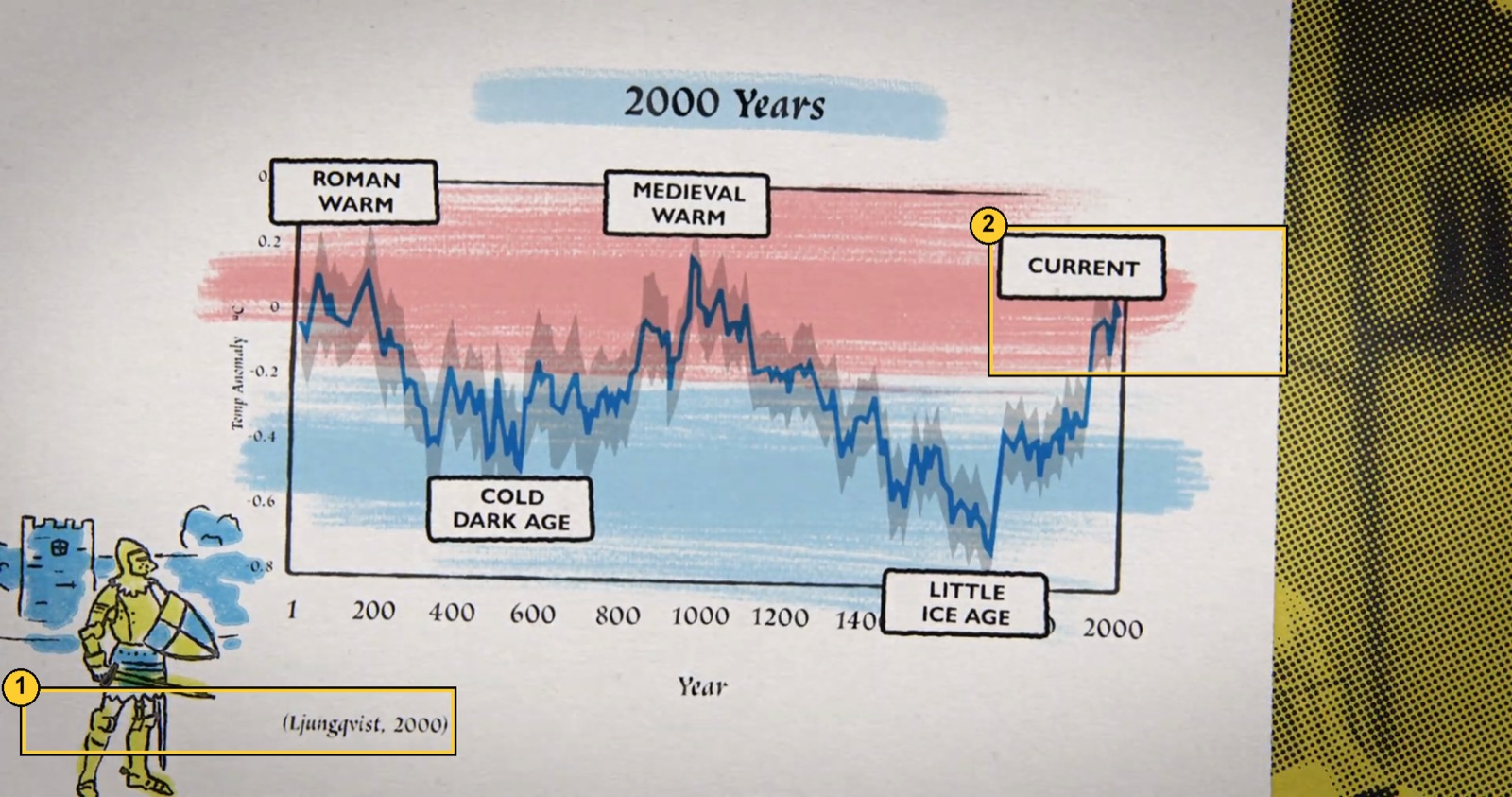
The authority is mostly visual, and the graphs are where I first noticed the method. A graph, I realised, does two things at once. It measures the world, and it tells you the world has already been measured, by someone careful, in a way I am not meant to check. Long before I read an axis, I recognised the shape, a clean line in a white frame, as scientific. The film lives in that second job: the chart labelled “Ljungqvist, 2000” is really a Northern-Hemisphere reconstruction from 2010, drawn so the medieval past looks as warm as today, when the measured record puts today higher. Precision creates an impression that convinces long before anyone checks a number.
A citation, in this film, is a costume. “Ljungqvist, 2000” has the full uniform of scholarship, a surname, a year, and points to a paper that does not exist. The same look runs across the whole film: white backgrounds, thin blue lines, a slow piano, walls of books. Oreskes and Conway named the machine this belongs to, the production of doubt that ran from tobacco through ozone to climate (Oreskes and Conway, 2010). What is new is the mood, calm and almost bored by its own certainty, with the doubt lifted off the viewer and set on the institutions, who now look like the nervous ones.
None of this, I realised, is unique to conspiracy. School taught me the same language. So did textbooks, the papers I was shown, even BBC documentaries: graphs, citations, neutral voices, tidy editing. Climate: The Movie works because it does not invent a new language of authority. It speaks the old one fluently. That turns the usual question around. We ask why people fall for a film like this and take it for science. The sharper question is why any of us learnt to recognise science by its appearance, when an appearance is exactly the thing that can be copied.
The film does more than borrow science; it casts it. The experts arrive by pedigree, a Nobel physicist, professors from Princeton, Harvard and MIT, filmed as grand authorities even though most work outside climate science. It took me most of the film to notice that almost everyone given a voice is an older man. That is not an accident: for a century, scientific authority has worn the face of the older professor, and the film knows the type as well as Hollywood knows a hero. Callison argues that a fact only comes to matter once a community agrees to carry it (Callison, 2014); beneath the repost, dissenters are voted down while others win by naming a Nobel Prize.
Halfway through, the film changes gear. “The Science” gives way to a claim about freedom: climate policy as an attack on how people travel, eat and live. The jump from evidence to accusation is dressed up as a reveal, something the viewer feels they have worked out for themselves, rather than a change of subject. And the film guards itself in advance: a report that YouTube throttled it spreads among admirers as proof of the very censorship the second act described, so every takedown or hostile review becomes one more scene in the story it has already told. Nothing that happens to it can count against it.
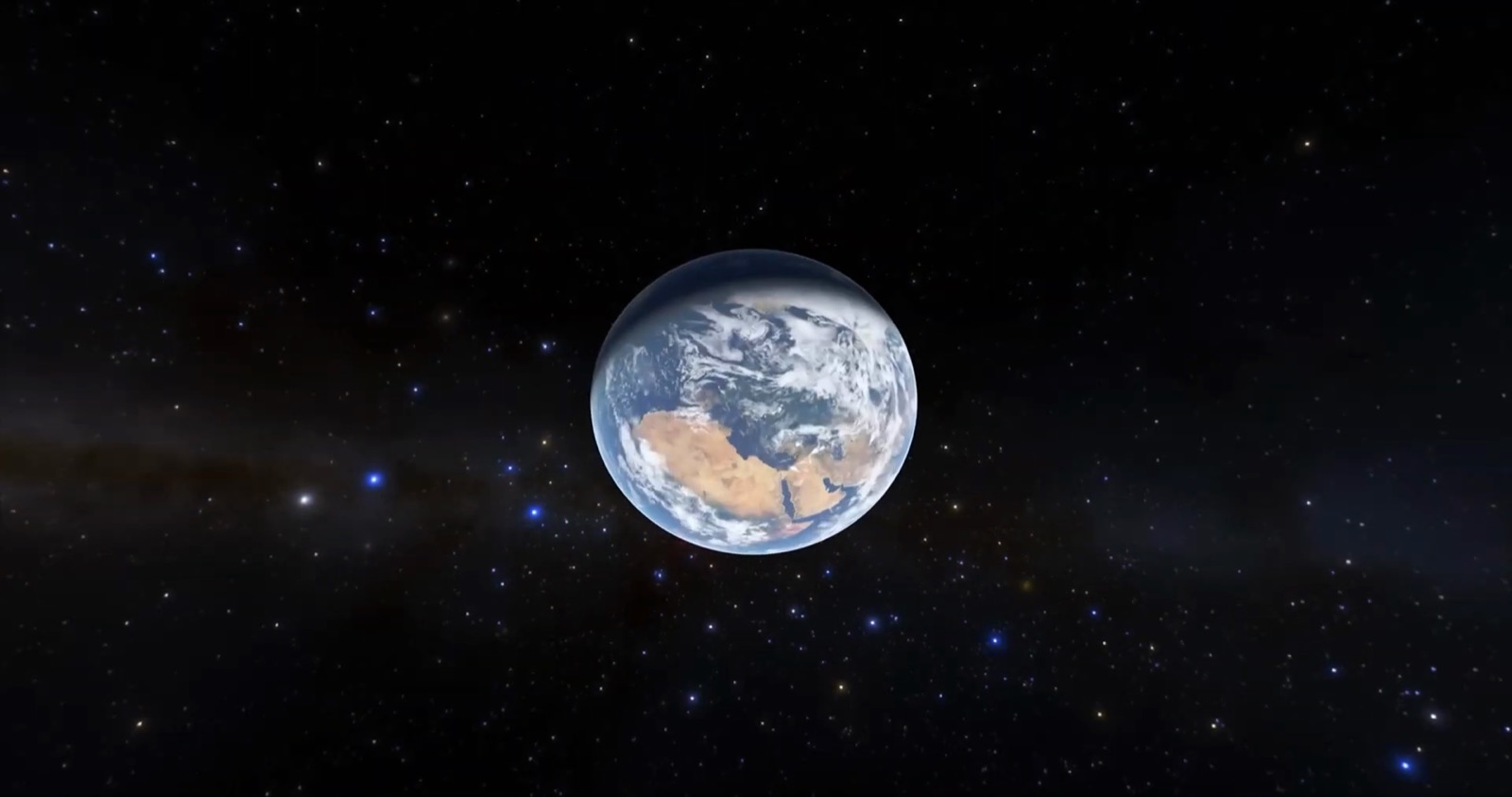
Set beside the world the ozone treaty avoided, the film’s advantage becomes clear. NASA’s picture of an unregulated 2065, two-thirds of the ozone gone, only convinces because none of it happened. Mathews and Barnes note that futures are hard to build and harder to make people believe in (Mathews and Barnes, 2016), and an avoided future is the hardest of all. The Montreal Protocol worked so well that it wiped out its own evidence: nobody remembers the ruined sky it prevented, because that sky never came, and a success no one can see is a success no one thanks. Climate denial just points at the world people wake up in and says nothing bad has happened.
What stayed with me had less to do with either future than with how easily I had recognised all of it. Long before we weigh any evidence, all of us, scientists included, learn to read certain voices, certain graphs, certain rooms as the places where truth is likely to live. The film rebuilds the feeling of scientific certainty so well that a viewer can move in and settle. The question I was left with, once it was over, was quieter: how many other things I have trusted, over the years, for exactly the same reasons, the calm voice, the clean graph, the room full of books :’) !
Bibliography
- Callison, C. (2014) How Climate Change Comes to Matter: The Communal Life of Facts. Durham: Duke University Press.
- Dearing, A. (2023) ‘Should We Just Listen to the Scientists?’ JSTOR Daily. Available at: https://daily.jstor.org/should-we-just-listen-to-the-scientists/
- DeSmog (2024) ‘A Green New Shine for a Tired Playbook.’ 21 March. Available at: https://www.desmog.com/2024/03/21/climate-the-movie-martin-durkin-co2-coalition-heartland-institute-cfact-climate-denial/
- Grantham Research Institute on Climate Change and the Environment (2024) ‘Fake graphs and daft conspiracy yarns in Durkin’s latest propaganda film.’ LSE, May. Available at: https://www.lse.ac.uk/granthaminstitute/news/fake-graphs-and-daft-conspiracy-yarns-in-durkins-latest-propaganda-film/
- Mathews, A.S. and Barnes, J. (2016) ‘Prognosis: Visions of Environmental Futures.’ Journal of the Royal Anthropological Institute, 22(S1), pp. 9–26.
- Meyer, J.M. (2024) ‘Power and Truth in Science-Related Populism.’ Political Studies, 72(3), pp. 845–861.
- Oreskes, N. and Conway, E.M. (2010) Merchants of Doubt. New York: Bloomsbury Press.
Written for Prof Ann Kelly’s course on anthropology and climate change at Exeter College, Oxford, during the Exeter College Summer Programme 2026.
More on climate: the climate page.