"Whose lives count as lives?"
— Judith Butler, Precarious Life, 2004
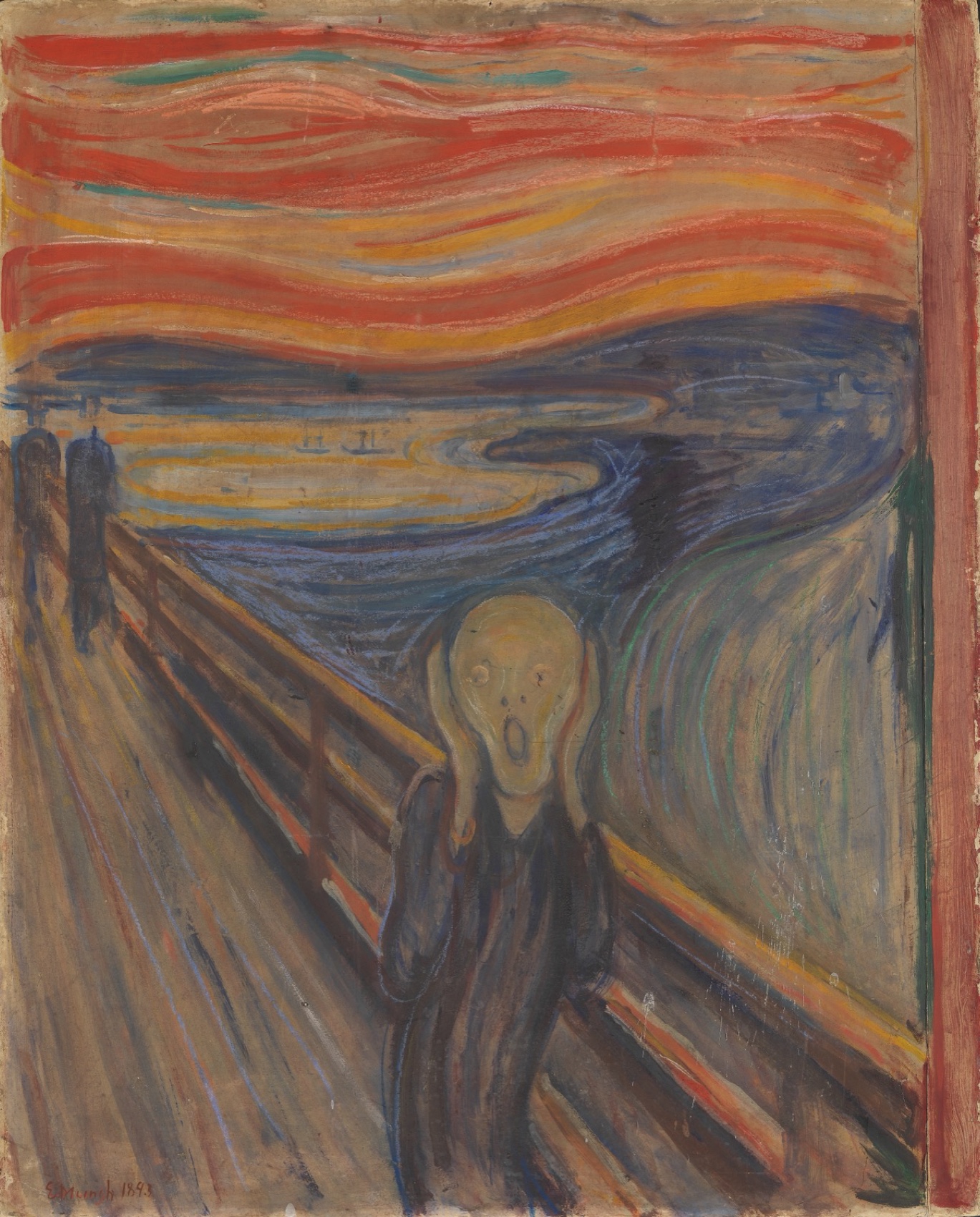
Didier Fassin distinguishes an event from a crisis. An event becomes a crisis only when it is evaluated as one, named urgent and made to demand a response (Fassin, 2021: 262, 264). Pollution and warming are the event; the crisis is the judgement passed on them, and crisis, from the Greek krinein, to judge and decide, has always been closer to a verdict than a discovery (Koselleck, 2006: 358). A song about the environment arranges an encounter, telling us how long to linger, what to feel, and who should answer for it. Songs are ways to focus our attention: they cultivate ways of perceiving, inhabiting and morally evaluating events as crises, and in teaching us what to hear, each teaches us whose loss matters. I came expecting to judge these songs by their lyrics, and found their arguments interestingly in repetition and tempo as well!
Marvin Gaye, ‘Mercy Mercy Me (The Ecology)’ (1971)
It is very interesting how this song trains a listener to find pollution morally intolerable. The damage pre-existed, oil wasted on the oceans, ‘fish full of mercury’, radiation underground and in the sky, inert until a form makes it matter. Gaye draws on a pleading, communal voice. The repeated 'mercy' and the slow call-and-response are all lent to the sea and sky, so a chemical spill is heard as a desecration rather than a technical failure. He sings the wounded world like a prayer until the plea becomes a rite, and the saxophone fades instead of ending fully, leaving the grief with nowhere to settle. The song's 'we' is meant to be everyone. It widens until it holds all of humanity before a single wounded Earth. That reach makes Gaye sound, decades early, like the universalising language of Anthropocene discourse, and it is also where he is blind: the song teaches us to mourn together before it asks whose loss this really isor who caused it.
Childish Gambino, ‘Feels Like Summer’ (2018)
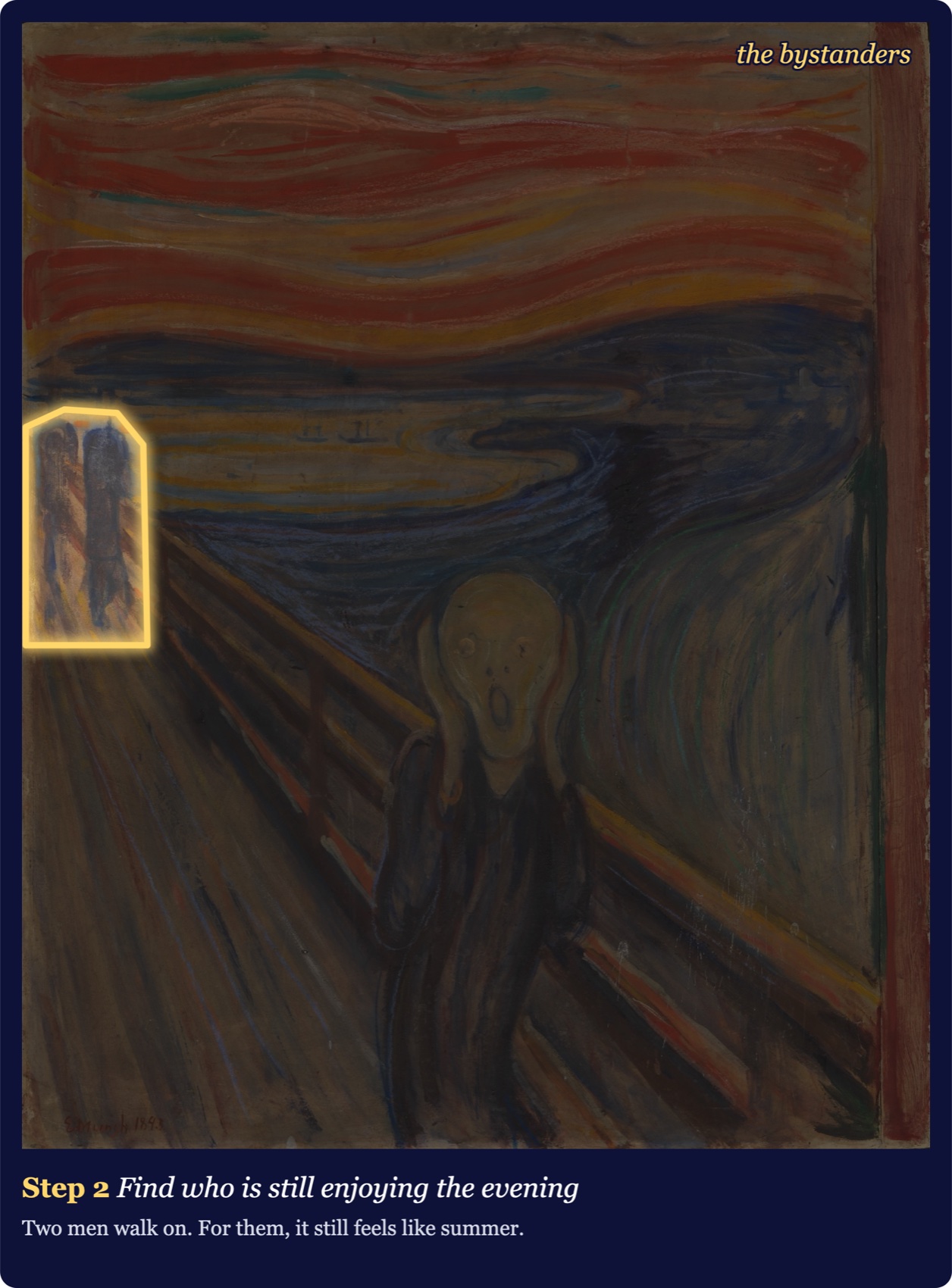
Childish Gambino tries to focus on something quieter, normalization. The words state the collapse plainly, ‘air that kill the bees’, a season hotter than the last, but the music never sounds worried. The beat is easy and the singing soft and half-sung, so the dread stays well below the surface and a casual listener hears only a pleasant summer song. Its audience is young and online, the generation that catches every Black cultural figure the video parades past. That gap between the calm sound and the grim words seems to make the point. The song makes catastrophe feel ordinary and survivable, which is exactly what anthropologists watch resilient communities do, quietly absorbing the exceptional until it turns into everyday life. Gibbard and colleagues call the Anthropocene an event that unfolds unevenly and never really ends (Gibbard et al., 2022: 395), and ‘Feels Like Summer’ is the music of living inside it, of driving to work while the light stays golden and the insects thin out. What it puts at risk is our ability to keep noticing the loss at all, and, as we discussed in the lecture, even that turns out to be unevenly shared. Comfort is a privilege, one of the factors on who gets a more comfortable life versus who bears the effects of climate change is the money they can spend to ‘buy’ comfort.
Whose crisis?
Gaye and Gambino both imagine climate crisis as increasingly shared, a grieving we and a drowsy one. Dionne Brand describes some crises as permanent conditions, lived rather than awaited (Brand, 2020): for communities whose land was remade by colonial violence generations back, ecological ruin is no newly emerging condition. Gergan, Smith and Vasudevan add that an apocalypse imagined as common human fate erases the histories of race and colonialism through which ecological violence has always been distributed (Gergan et al., 2020: 92).
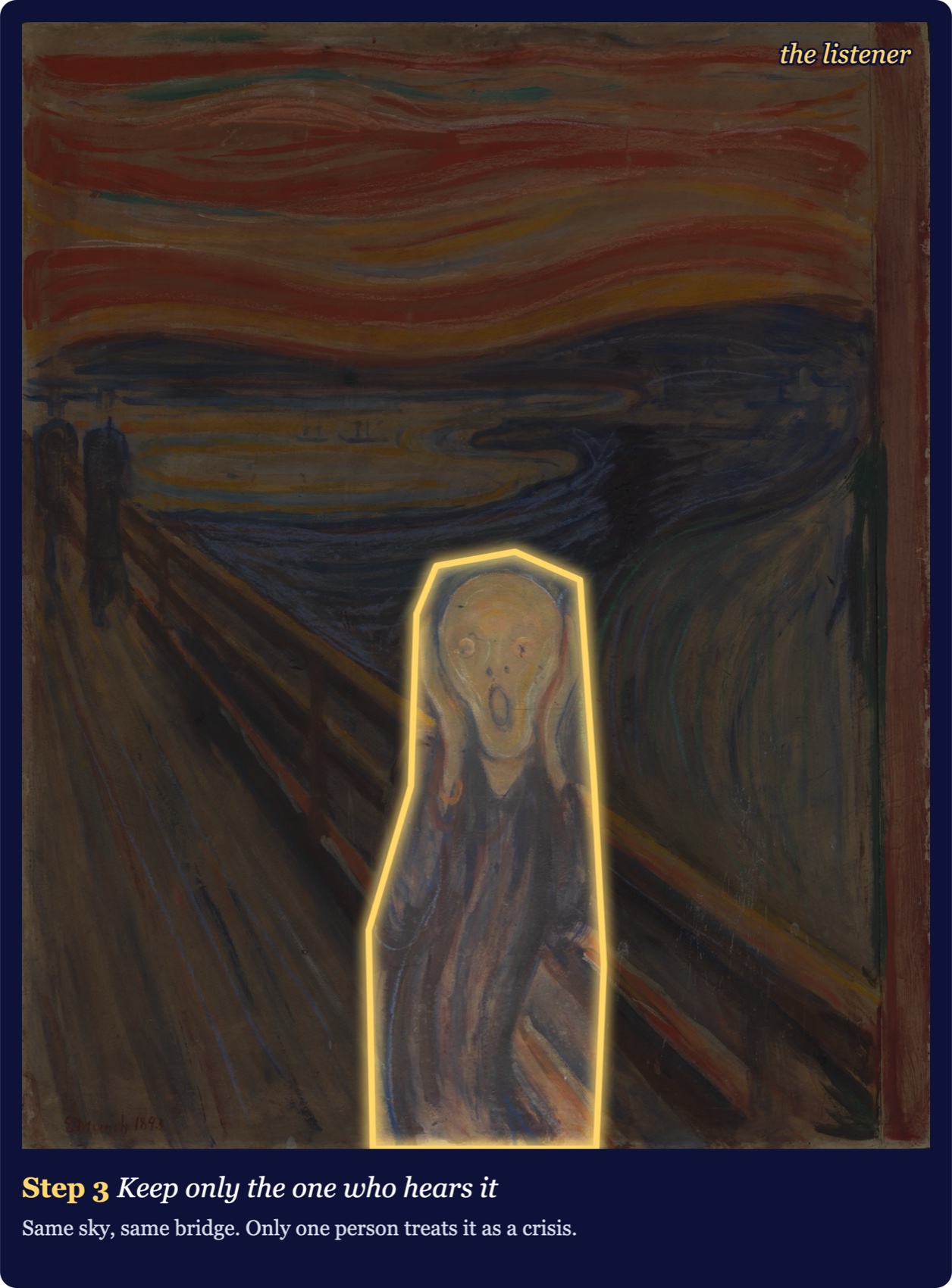
Their intervention is indispensable, and worth pressing further. Rejecting every universal account of vulnerability leaves too little ground for shared ethical commitment, and climate change, however unevenly it falls, remains a planetary fact. The challenge is to hold universalism and specificity together! The crisis is shared but ‘together’ has always concealed a question about who pays.
The absence of environmental language is not the absence of environmental crisis. For communities already living through displacement, poisoned rivers or slow violence, a song need not name climate change to be about it; sometimes the loudest environmental music never says the word ‘environment’ at all. None of these three holds the shared and the unequal fully together, which is why a fourth voice is needed.
Lorde, ‘Fallen Fruit’ (2021)
Lorde asks when the crisis began, pivoting it from space to time. ‘You’ll leave us dancing on the fallen fruit,’ she sings to her parents’ generation, in a song she has called an address to them, do you know what you’ve done? She speaks for the inheritors in a hushed arrangement with soft layered harmonies delivering a charge against a whole generation almost gently, as lament. The crisis is already underway before the narrator is born; she inherits an already damaged Eden, and its questions are those of inheritance, and therefore of kinship, obligation and distribution: who inherits the damage, who the responsibility, when did any of it begin. Inheritance is never equal; some receive resilience and distance, others a flooding coast and a shortened future. To ask when a crisis began is already political. Davis and Todd date the Anthropocene to colonisation (2017), so for the colonised the fruit fell centuries before Lorde’s parents, while Gibbard’s team refuse a single date, calling it an event without a clean beginning (Gibbard et al., 2022: 395). Lorde shows how a crisis is handed down, its origin always further back than whoever lives inside it, cultivating a suspicion of being made answerable for a decision one never took part in.
Who is allowed to name a crisis?
Heard back to back, the three songs disagree less about the climate than about what listening to a crisis should feel like. That is why I see songs as ways to focus our attention (given that our attention time span has decreased to 8 seconds with scrolling on social media!). An event turns into a crisis only when someone frames it as urgent and gets others to feel that urgency, and few things do that as intimately as music. Songs teach us a way of noticing things that feel like our own! It is tempting to think the crisis is simply out there and people are only more or less aware of it, some still oblivious, some newly worried, some already acting, some waiting to see.
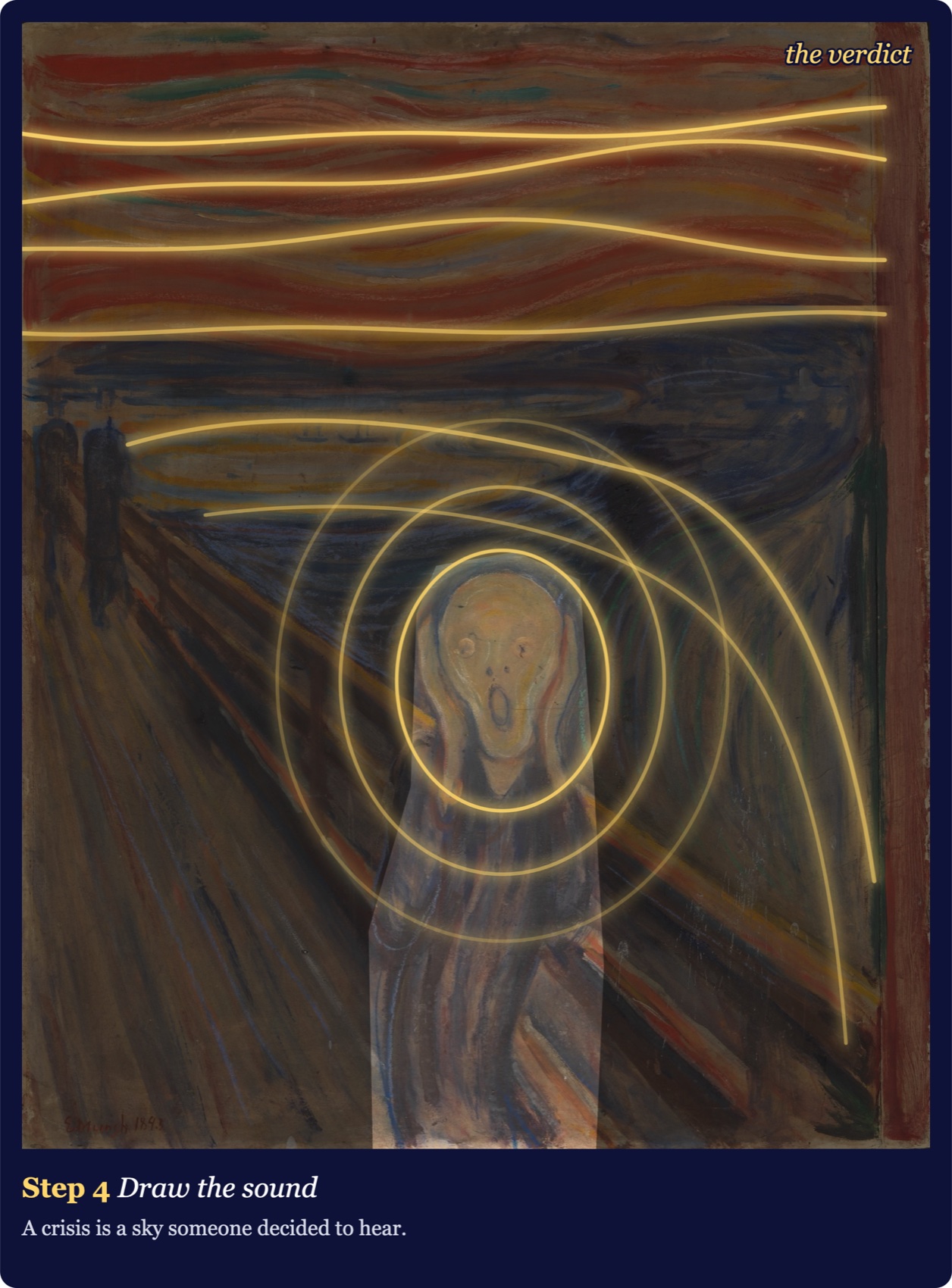
That spread is real, but it is less about information than about exposure: the person on a flooding coast is already acting because they have no choice, while the person for whom it still feels like summer can afford to wait. And people differ not only in how much they have noticed, but in what they take the thing to be, an emergency, ordinary life, or an old wound that never closed. So the real question is not who is aware and who is ignorant, but who calls something a crisis at all, and whose losses that name makes heard or keeps quiet.
Brand reminds us that for some people, crisis is not an interruption but the ordinary condition of life, and climate breakdown is like that too: for those already living inside it, it is not a coming emergency but a present one. And we do not all reach it at the same moment, nor are we all heard once we are in it. So listening harder will not, by itself, answer the question, who is allowed to call something a crisis, and whose loss that name carries. What has counted as 'environmental' has always depended on who was listening, and whose history was allowed to count, and that, more than any fact about the weather, is what the ‘anthropology of crisis’ hears!
References
- Gibbard, P. et al. (2022) 'The Anthropocene as an event, not an epoch.' Journal of Quaternary Science, 37(3), pp. 395-399.
- Gergan, M., Smith, S. and Vasudevan, P. (2020) 'Earth beyond repair: Race and apocalypse in collective imagination.' Environment and Planning D: Society and Space, 38(1), pp. 91-110.
- Brand, D. (2020) 'On narrative, reckoning and the calculus of living and dying.' Toronto Star, 4 July.
- Davis, H. and Todd, Z. (2017) 'On the importance of a date, or, decolonizing the Anthropocene.' ACME: An International Journal for Critical Geographies, 16(4), pp. 761-780.
- Fassin, D. (2021) 'Crisis.' In Das, V. and Fassin, D. (eds) Words and Worlds: A Lexicon for Dark Times. Durham: Duke University Press. Pp. 261-276
- Koselleck, R. (2006) 'Crisis', trans. M. Richter. Journal of the History of Ideas, 67(2), pp. 357-400.
- Butler, J. (2004) Precarious Life: The Powers of Mourning and Violence. London: Verso.
The songs
- Gambino, C. (2018) 'Feels Like Summer.'
- Gaye, M. (1971) 'Mercy Mercy Me (The Ecology).'
- Lorde (2021) 'Fallen Fruit.'
Written for Prof Ann Kelly’s course on anthropology and climate change at Exeter College, Oxford, during the Exeter College Summer Programme 2026.
More on climate: the climate page.